
Last updated November 21, 2026
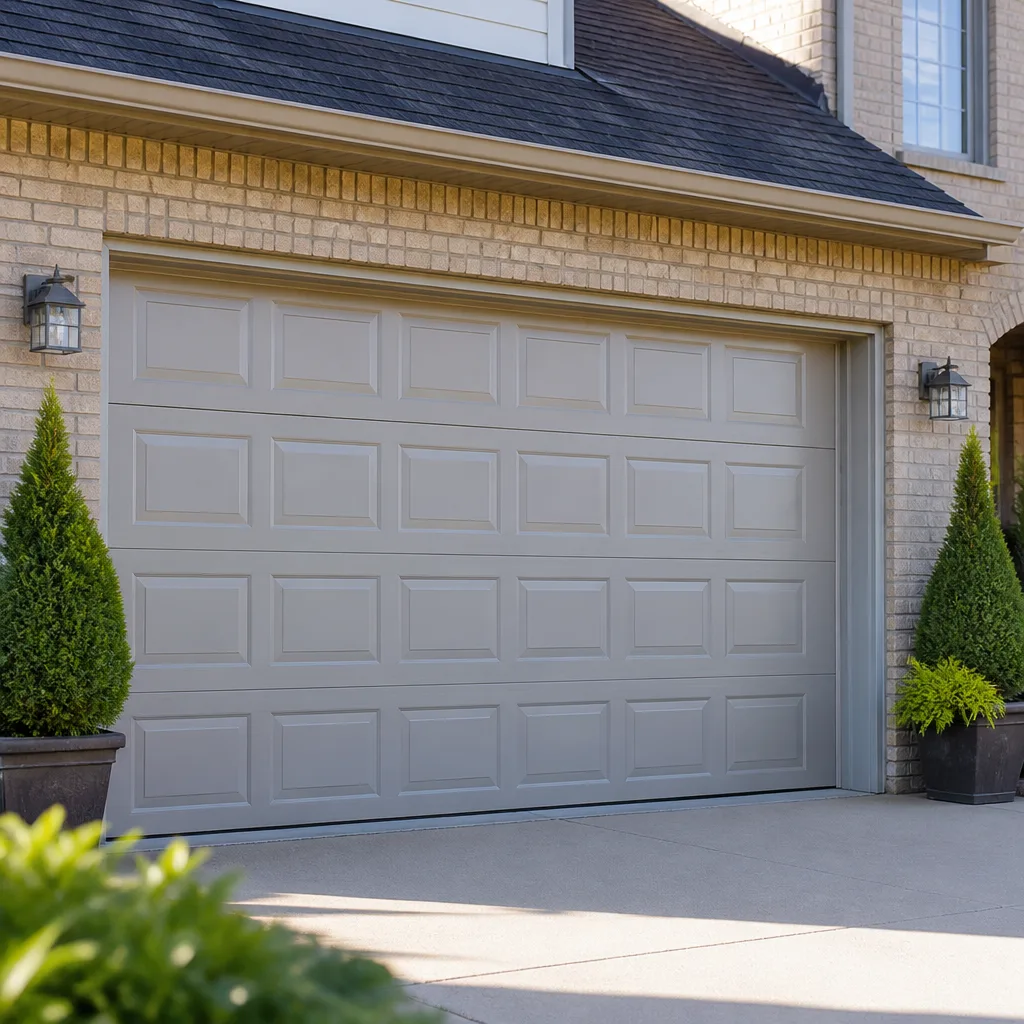 Raised-panel steel
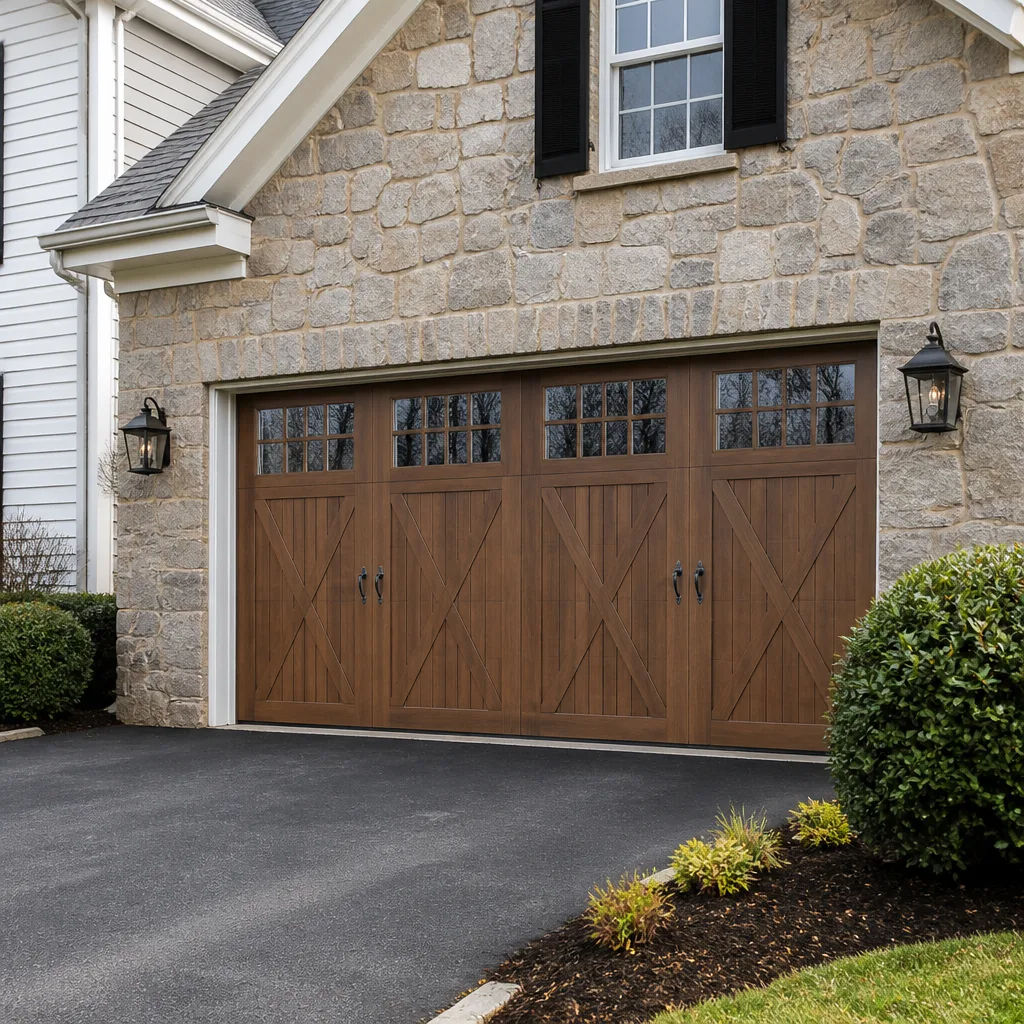 Carriage house
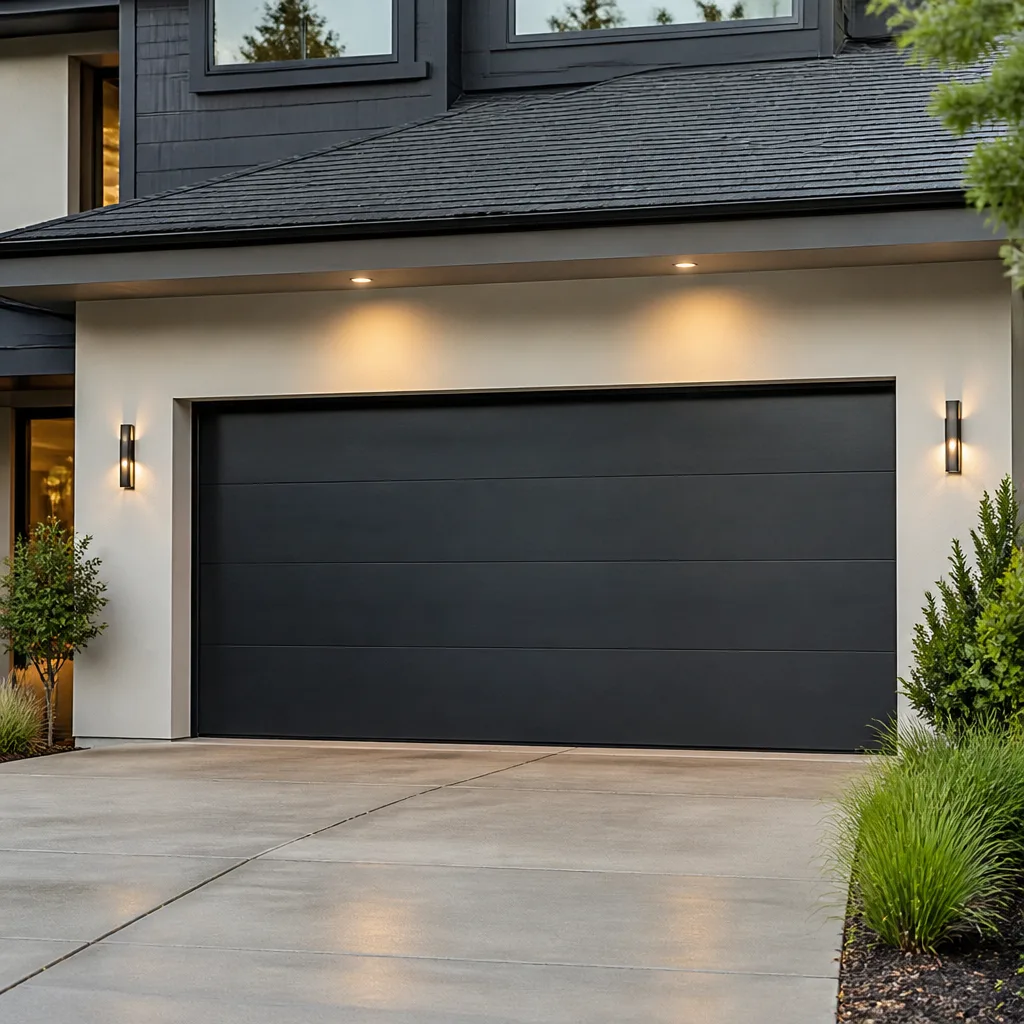 Modern flush
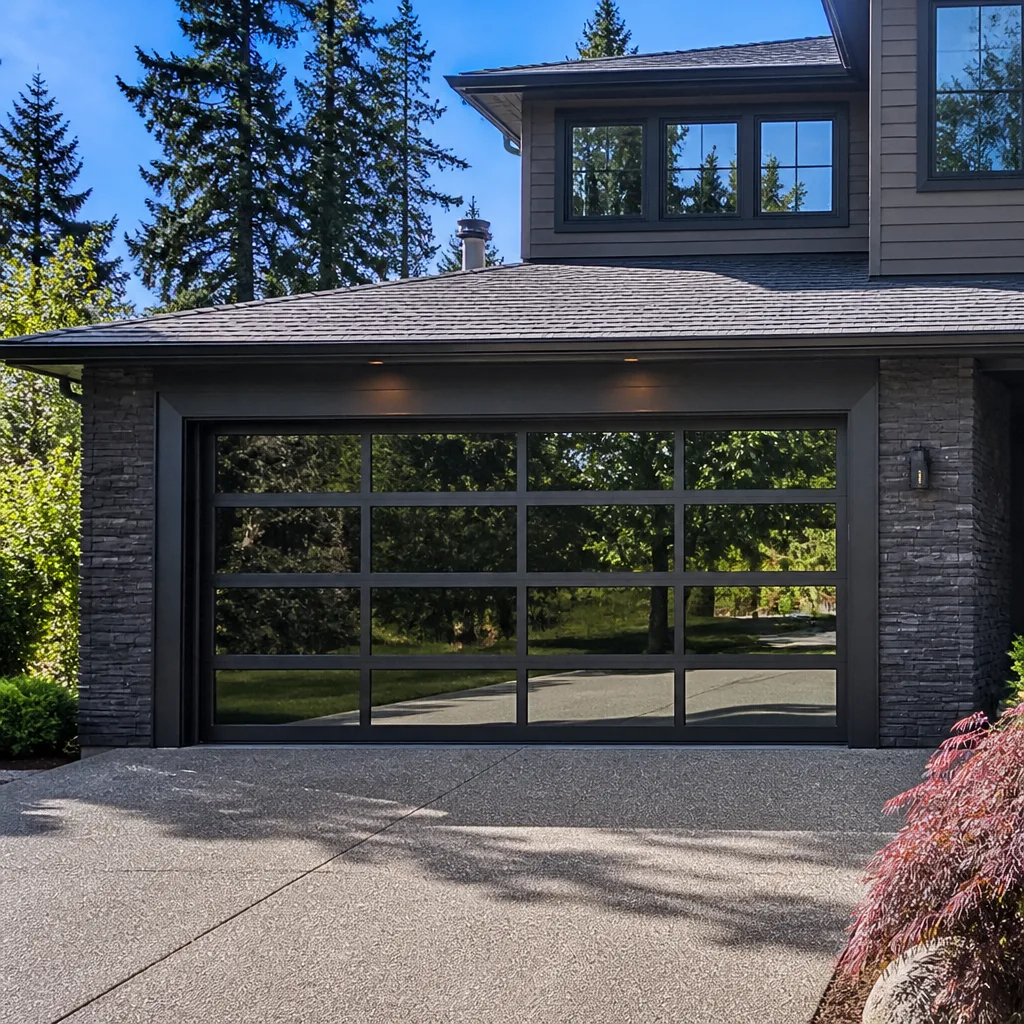 Full-view glass
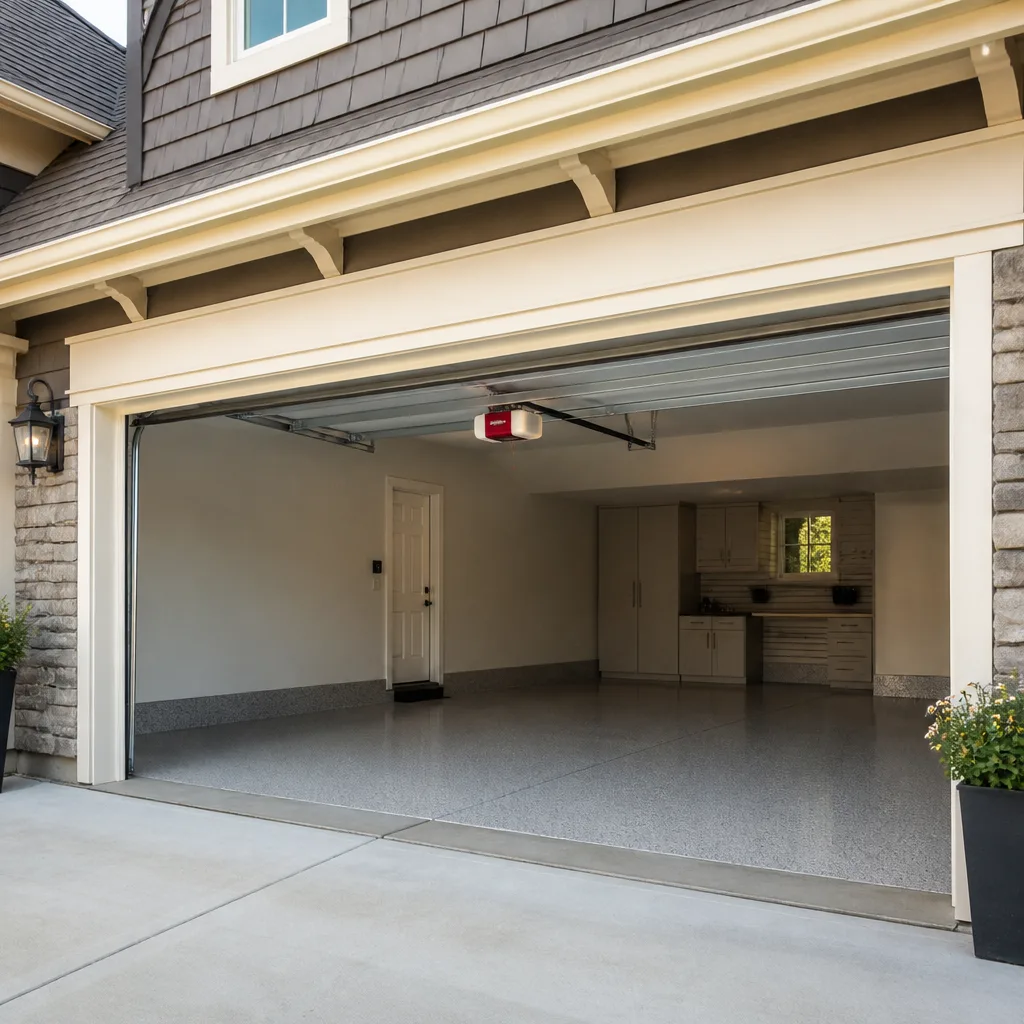 LiftMaster openers
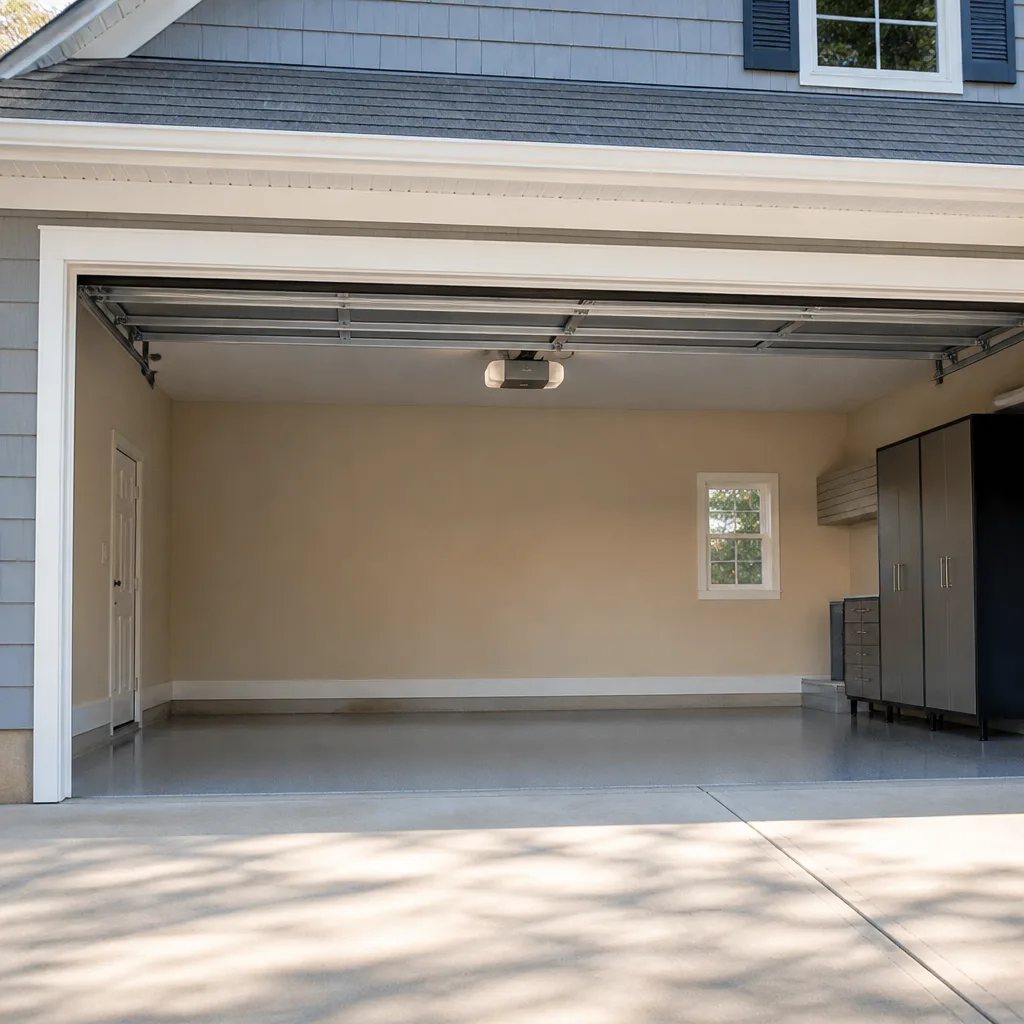 Chamberlain openers
Full 25-point door and opener safety check with every visit - springs, cables, rollers, tracks, and your LiftMaster or Chamberlain opener included
You get a price before we start. It does not change when the pro arrives.
Get your free estimateChoosing the Right Garage Door Brand: A Buyer’s Guide for Noblesville
A premium garage door brand means nothing if the nearest certified technician is 90 miles away and a proprietary spring takes two weeks to ship. That’s the part of the buying decision most Noblesville homeowners never hear about at the showroom. Brand matters, but not for the reasons the brochures push. What matters over the 15 years you’ll actually own the door is whether parts are available down the road in the Indianapolis corridor, whether the steel gauge holds up to an Indiana winter-to-summer swing, and whether the springs and cables are standard sizes any trained technician can match. This guide walks through those criteria, brand by brand, so your new door is still repairable a decade from now.
Quick Answer
For most Noblesville homes, the best garage door brand is the one with locally available parts, standardized spring and cable sizing, and a warranty you can actually collect on. Clopay and Amarr lead on insulation and standard components for attached garages here; LiftMaster and Chamberlain dominate the opener side; Wayne Dalton and Raynor are solid when a local distributor stocks their parts. The brand on the label matters less than whether a trained technician can get the right part the same week.
Styles & brands we work with
- Raised-panel steel
- Carriage house
- Modern flush
- Full-view glass
- LiftMaster openers
- Chamberlain openers
Table of Contents
- Why Parts Availability Beats Brand Prestige
- How Indiana’s Temperature Swing Affects Steel Gauge
- Insulation R-Value: Why It Matters for Attached Garages
- Warranty Terms Decoded: What ‘Lifetime’ Really Covers
- Standardized vs. Proprietary Springs and Cables
- Brand-by-Brand Notes for Noblesville Buyers
- Openers: The Other Half of the Decision
- A Step-by-Step Way to Choose
Why Parts Availability Beats Brand Prestige
Parts availability is the single biggest predictor of whether a 10-year-old garage door is repairable or scrap. A door is a mechanical system with wear parts: springs, cables, rollers, hinges, and an opener. Those parts fail on a schedule. The question is whether the replacement is on a shelf in the Indianapolis area or on a slow boat from a factory that stopped stocking it.
In the Noblesville and greater Indianapolis corridor, the brands with the strongest local distributor presence tend to be the ones you’ll see on the most driveways in neighborhoods like Morse Park, Deer Creek, and around the courthouse square. That’s not an accident. Distributors stock what sells, and technicians stock what they can get quickly.
Here’s what to weigh:
- Local distributor footprint. A brand carried by area distributors means same-week parts, not a two-week wait with a car trapped outside.
- Common wear parts. Rollers, hinges, and standard cable diameters are easy. Proprietary torsion springs are the sticking point.
- Openers. LiftMaster and Chamberlain parts are everywhere because the brands are ubiquitous. A discontinued boutique opener is a different story.
When we evaluate a door for a Noblesville homeowner, the first thing we check is whether the springs and cables are standard sizes. If they are, the repair is straightforward and the door has years left. If they’re proprietary and discontinued, we’re honest about the trade-off between hunting parts and replacing the door.
How Indiana’s Temperature Swing Affects Steel Gauge
Indiana’s temperature range is the reason a door rated for a Southern climate can underperform here. Noblesville sees cold winters and humid summers, and that cycle works a garage door hard. Steel expands and contracts, seals shrink and swell, and springs cycle through more stress than they would in a milder market.
Steel gauge is the thickness of the door skin. Lower gauge numbers mean thicker steel. A thicker gauge resists denting and holds its shape through thermal movement better than thin steel. It also weighs more, which affects spring sizing and opener load.
What this means for a Noblesville buyer:
- Thicker steel holds up better to the freeze-thaw and humidity swing than a light-gauge door built for a mild climate.
- Heavier doors need the right springs. A thicker door paired with undersized springs wears out faster, so sizing has to be matched to the door weight.
- Seals and weatherstripping matter more here. A door that seals poorly in a cold snap lets drafts and moisture into the garage, which is a real issue for attached garages.
Brands that offer multiple gauge options give you room to spec up for this climate. A Southern-market brochure door with a thin skin may look identical in a showroom but won’t hold up the same way through an Indiana January. Ask what gauge you’re getting, not just what the door “looks like.” When we talk through a garage door installation with a Noblesville homeowner, we match the gauge and spring sizing to the actual climate and door weight, not to a generic spec sheet.
Insulation R-Value: Why It Matters for Attached Garages
Insulation matters most in attached garages, and most Noblesville homes have one. An attached garage shares a wall with the house, so a poorly insulated door pulls heat out of the living space in winter and lets heat in during summer. That shows up on your energy bill and in how comfortable the rooms above or beside the garage feel.
R-value measures resistance to heat flow. Higher is better for an attached garage. The trade-off is weight and cost. A well-insulated door is heavier, which again means springs and opener have to be sized correctly.
How the major brands stack up on insulation:
- Clopay offers a range of insulated models, from basic to high-R polyurethane, so you can match the value to how the garage is used.
- Amarr also carries a range of insulated options with solid construction for this climate.
- Wayne Dalton has insulated lines that hold up well, particularly where a local distributor carries the parts.
- Raynor offers insulated commercial-grade construction that suits some residential applications.
For a garage that’s just parking, a basic insulated door is often enough. For a garage used as a workshop, gym, or extra living space, a higher R-value earns its keep in a Noblesville winter. Ask for the R-value in writing and compare it apples to apples across brands, because “insulated” on a brochure can mean anything from a thin foam panel to a fully filled polyurethane core.
Warranty Terms Decoded: What ‘Lifetime’ Really Covers
“Lifetime warranty” almost never covers the whole door, and that’s the trap. Most brands split coverage into sections: the door sections themselves, the hardware, the springs, and the finish. Each has different terms, different exclusions, and often a prorated schedule that shrinks what you get back over time.
Here’s how to read a warranty without getting fooled:
- Find what section each term applies to. The “lifetime” part usually covers the door panels against defects, not the springs or opener.
- Check whether springs are covered separately. Springs are the most common failure and are often excluded or prorated, so read that line carefully.
- Look for the labor exclusion. Warranties typically cover parts, not the labor to install them.
- Check proration. A “limited lifetime” finish warranty may pay less each year, so the coverage shrinks over time.
- Confirm it transfers. Some warranties transfer to a new owner; some don’t. That matters if you sell the house.
The brands we work with most, including LiftMaster on the opener side and Clopay and Amarr on doors, all publish these terms, and the language varies. Read the actual document before you buy, not the sticker on the showroom door. A door with a shorter but clearer warranty can be a better deal than one with a headline “lifetime” term that excludes the parts that actually break.
Standardized vs. Proprietary Springs and Cables
Standardized spring and cable sizing is the quiet factor that decides your long-term repair cost. A spring is a wear part. It will fail. The only question is whether the replacement is a standard size a technician can match from stock or a proprietary part tied to one brand.
Standard springs and cables follow common sizing conventions, so any trained technician can match the wire gauge, inside diameter, and length. Proprietary components are built to a brand’s own spec, which means the part has to come from that brand or a specialty supplier. That can mean a longer wait and a higher cost when it fails.
Why this matters over a 15-year ownership window:
- Wear parts fail more than once. Over 15 years you may replace springs more than once, so standard sizing pays off each time.
- Proprietary parts age out. A brand may discontinue a proprietary component, leaving a perfectly good door stranded.
- Cables are less proprietary than springs, but odd diameters and fittings still create headaches.
Brands that favor standard sizing, including many Clopay and Amarr models, tend to be the easier doors to keep running long-term in Noblesville. When a proprietary system does come up, we tell the homeowner up front what the part availability looks like. Springs are under extreme tension and store a lot of energy, so this is not a DIY repair, and matching the part correctly is a safety issue, not just a cost one.
Brand-by-Brand Notes for Noblesville Buyers
No brand is right for everyone, but a few patterns show up again and again in Noblesville. Here’s how the major names tend to shake out on the criteria that matter here.
- Clopay. Strong insulation lineup, wide range of standard models, good parts availability. A common choice for attached garages where R-value matters.
- Amarr. Solid construction, standard component sizing, competitive insulated options. A dependable mid-to-upper choice for this climate.
- Wayne Dalton. Good doors when a local distributor supports the line, which matters for part availability. Worth checking what’s stocked locally before committing to a proprietary model.
- Raynor. Heavier commercial-grade construction that suits some residential uses; check parts support in the area.
On the opener side, LiftMaster and Chamberlain dominate because parts and accessories are everywhere, and Genie and Craftsman are common on older Indiana homes. The brand on the door and the brand on the opener don’t have to match, but they do have to be compatible, and that’s where a trained technician earns their keep.
In our experience, the door brand a Noblesville homeowner picks matters less than whether the door’s wear parts are standard and locally supported. A well-chosen mid-tier door with standard springs will outlast a premium door with proprietary parts that can’t be sourced.
Openers: The Other Half of the Decision
The opener is the half of the system most buyers ignore until it fails. LiftMaster and Chamberlain are the dominant brands, and their parts are widely available, which matters when a gear or logic board fails. Genie and Craftsman show up on plenty of older Noblesville homes, and both are serviceable when the right parts are on hand.
What to weigh on the opener side:
- Parts availability. A ubiquitous brand is easier and faster to repair.
- Compatibility with your door weight. A heavier insulated door needs an opener rated for it.
- Smart features. If you want app control, confirm the brand supports it rather than adding a workaround.
When an opener fails, the fix is often a sensor, gear, or board rather than a whole new unit, which is why garage door opener repair is often the faster, cheaper path than replacement. We work on LiftMaster, Chamberlain, Genie, and Craftsman systems specifically, so the diagnosis doesn’t start from scratch.
A Step-by-Step Way to Choose
Here’s a practical order of operations for a Noblesville buyer, whether you’re replacing a door or choosing a brand for a new build.
- Check local parts support first. Ask which brands your area’s distributors stock. A brand with no local footprint is a long-term risk.
- Confirm the steel gauge. Spec up for Indiana’s temperature swing, not a Southern-climate brochure door.
- Get the R-value if the garage is attached. Match insulation to how the garage is used.
- Read the warranty by section. Know what covers panels, springs, hardware, and finish, and whether labor is included.
- Verify standard spring and cable sizing. This is your long-term repair cost, so ask directly.
- Match the opener to the door weight. Confirm compatibility and parts availability before you commit.
If a door is already failing and you’re deciding between repair and replacement, a garage door repair evaluation can tell you whether the existing door is worth keeping. We handle every brand and model, so the assessment doesn’t depend on which brand you already own.
Common Mistakes to Avoid
- Buying on brand prestige alone. A premium label with no local parts support is a paperweight waiting to happen. Check the distributor footprint before the showroom.
- Ignoring steel gauge. A thin door built for a mild climate won’t hold up through an Indiana freeze-thaw cycle. Ask for the gauge, not just the look.
- Skipping the R-value on an attached garage. Insulation isn’t a luxury in a Noblesville attached garage; it’s what keeps the rooms beside it comfortable.
- Trusting a “lifetime warranty” headline. The springs that actually break are often excluded or prorated. Read the sections.
- Choosing proprietary parts without checking availability. A proprietary spring that’s discontinued turns a repair into a replacement.
- Mismatching the opener to the door. A heavier insulated door needs an opener rated for it; undersizing wears both out faster.
- Assuming any handyman can do spring work. Springs store serious energy, and a mismatched part is a safety problem, not just a cost one.
See the difference
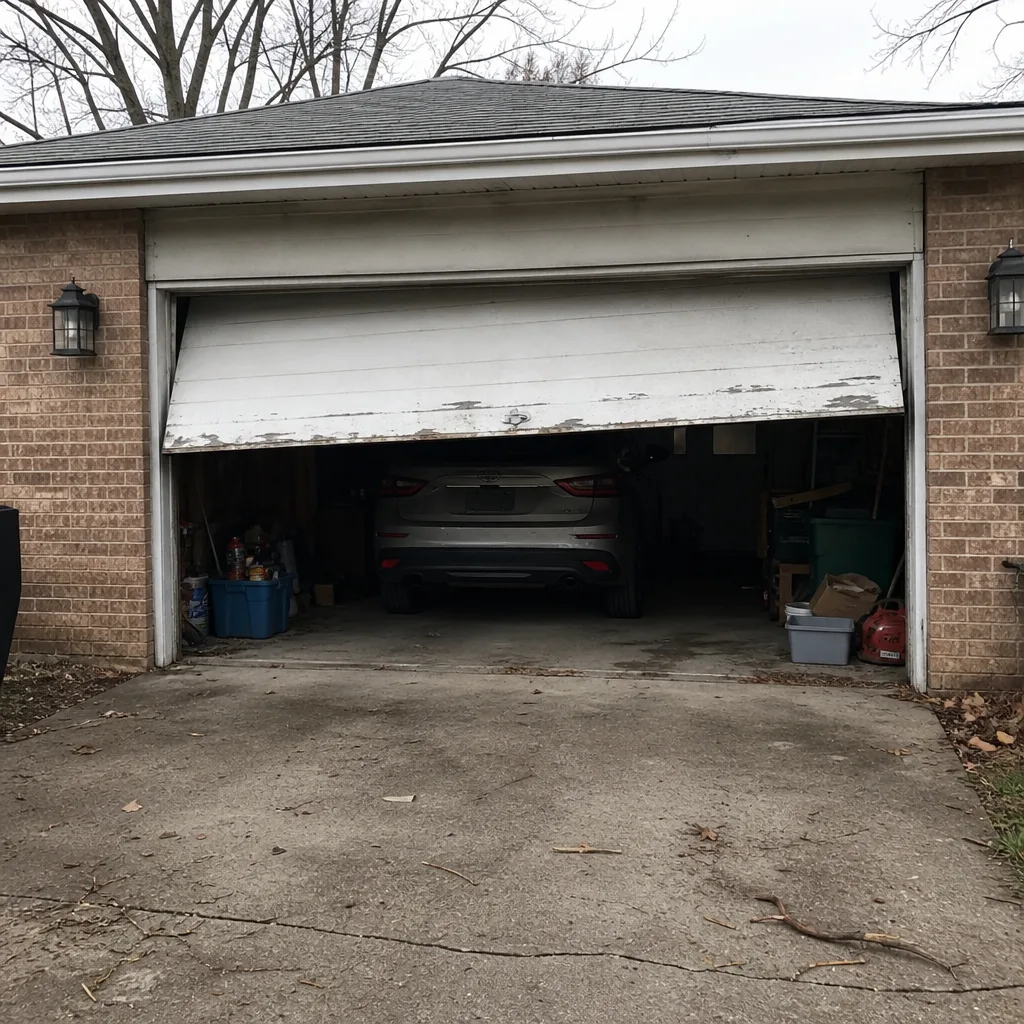 Before
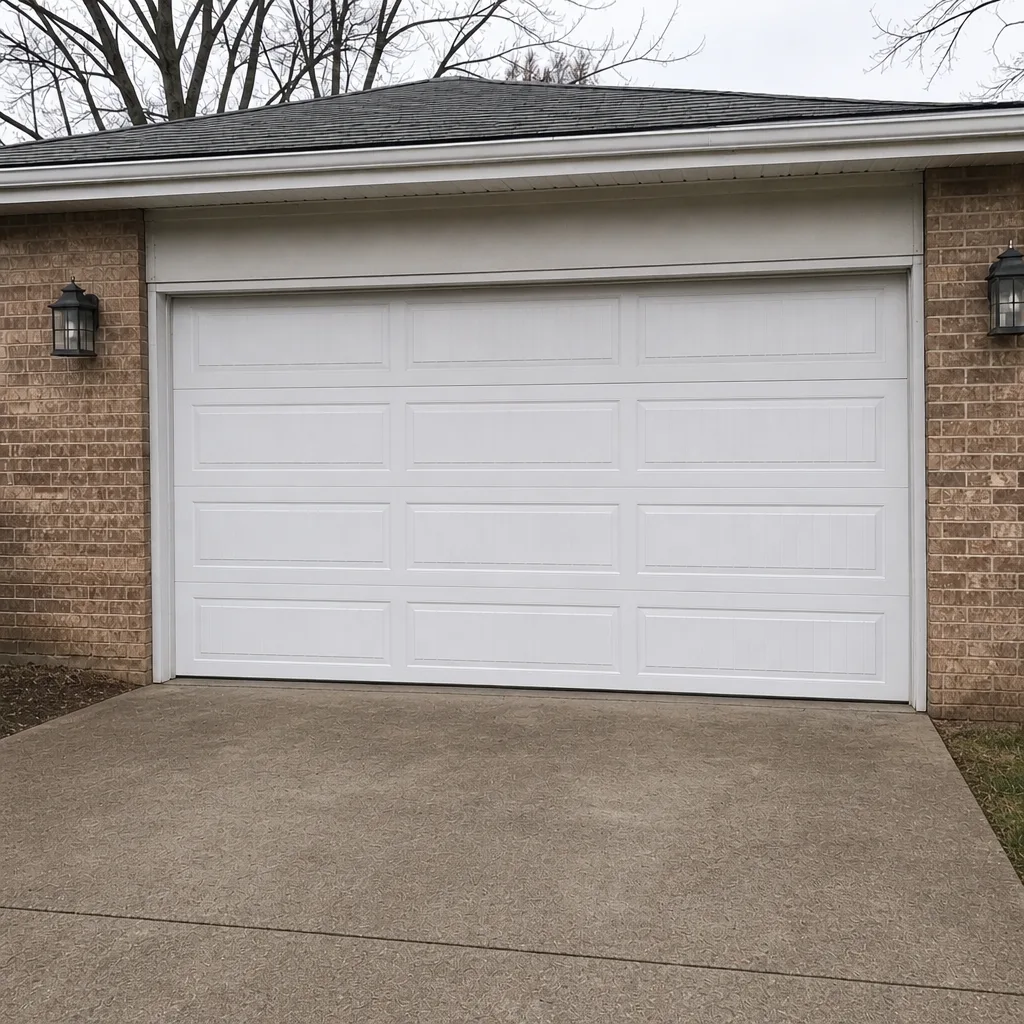 After
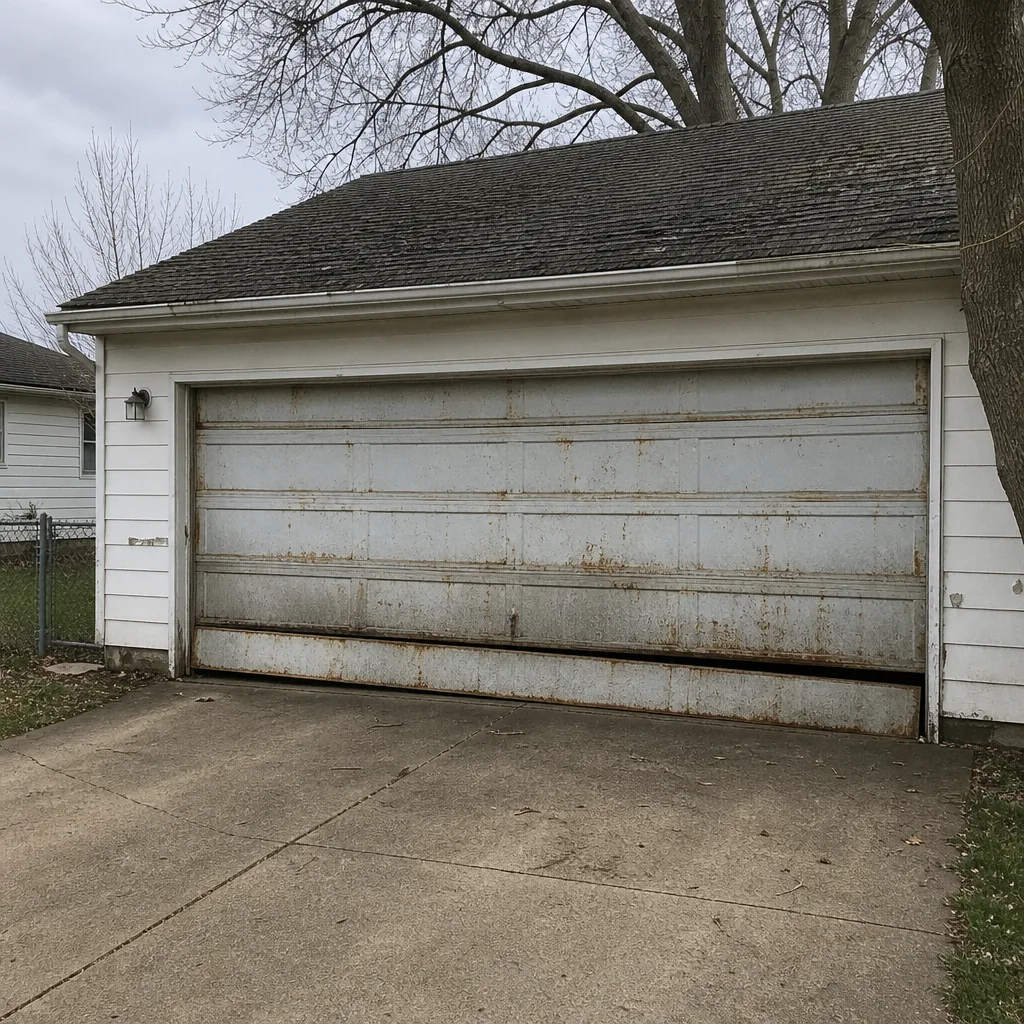 Before
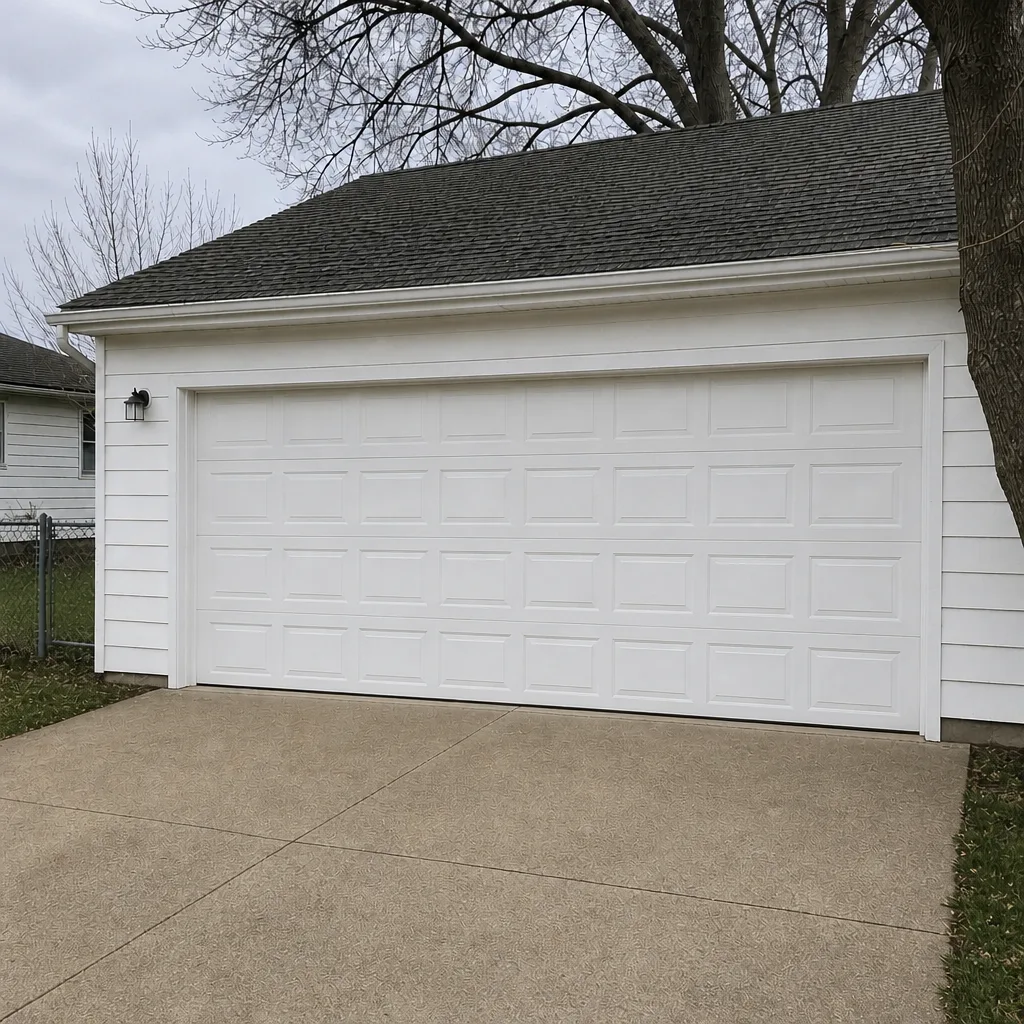 After
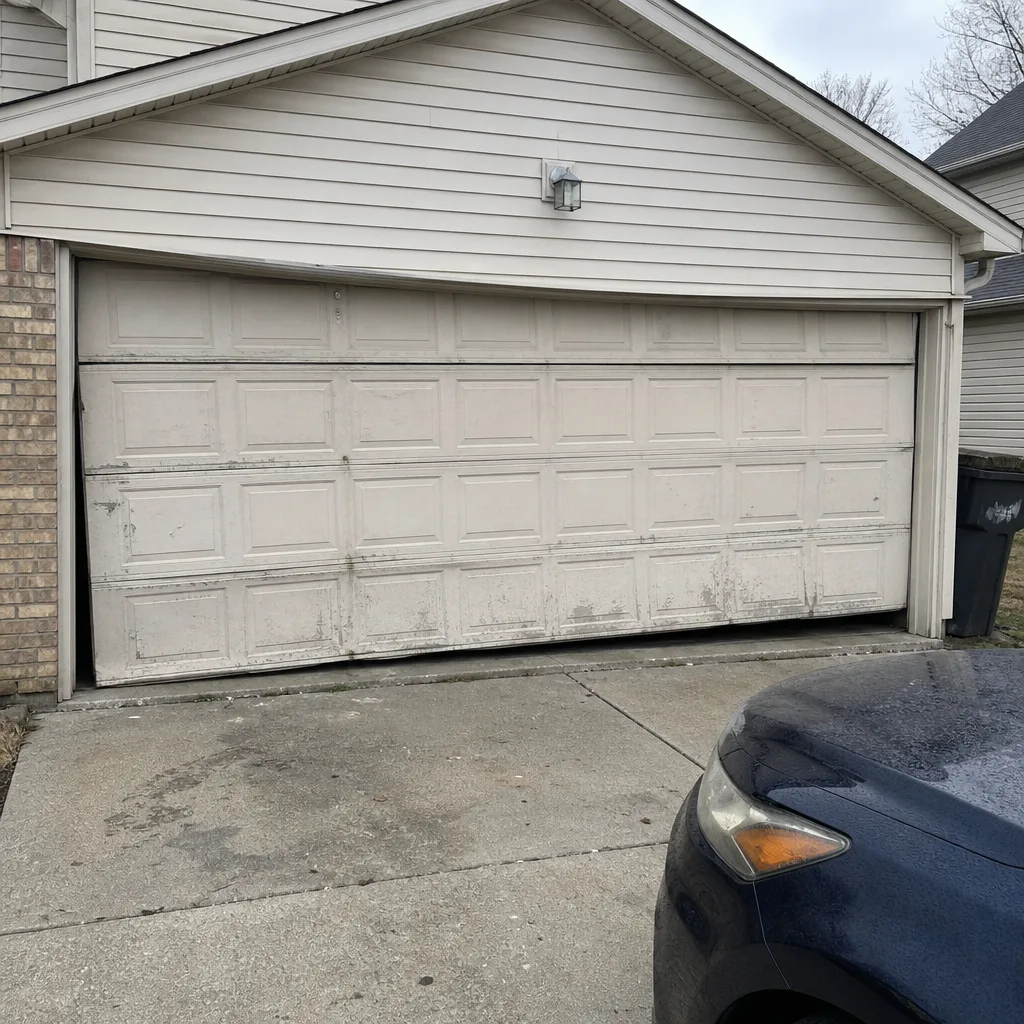 Before
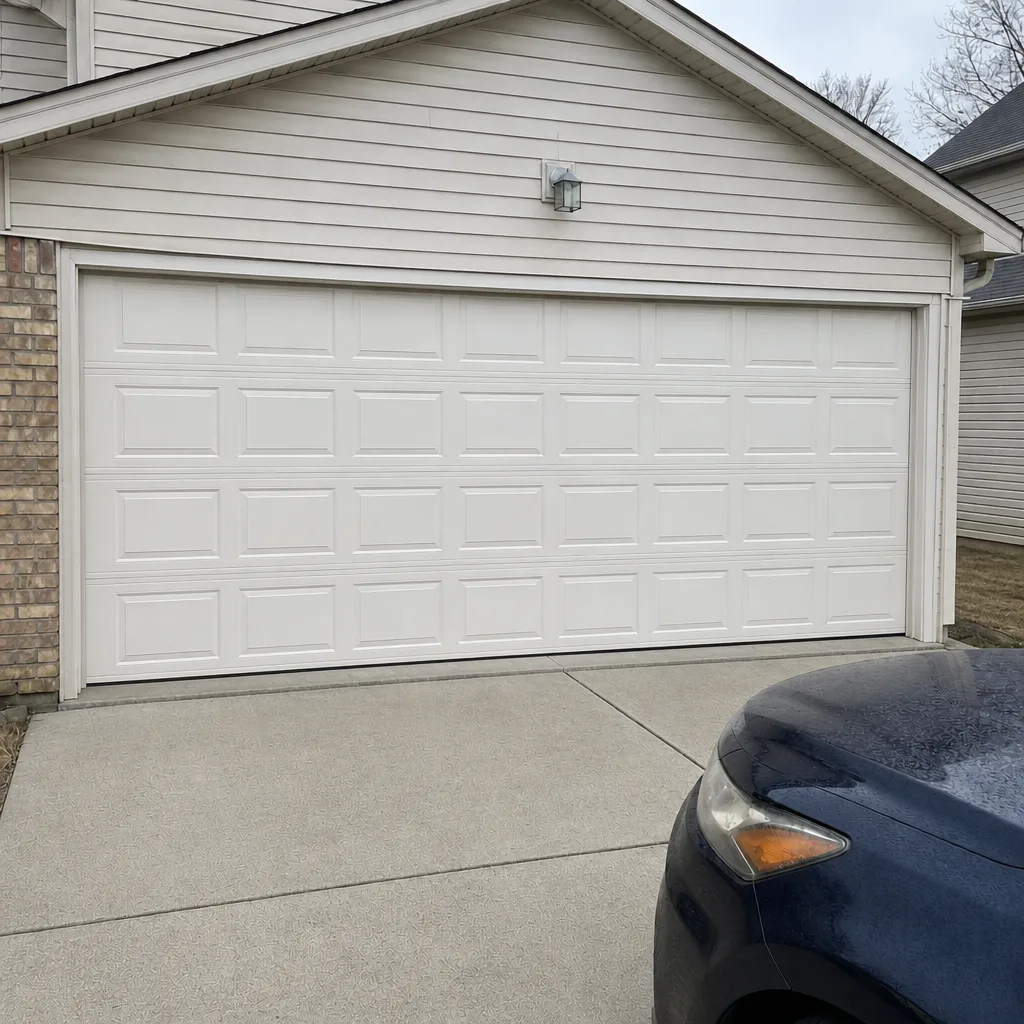 After
When to Call a Professional
Some jobs are safe to reason through; others aren’t. Call a professional when a spring snaps, when the door comes off its track, when the opener runs but the door doesn’t move, or when the door won’t close all the way. Springs and cables are under extreme tension, so a DIY attempt on those parts is where people get hurt. Call us if you’re weighing a repair against a replacement and want an honest read on which makes sense for your door. We work on all eight major brands, so the answer doesn’t depend on what you own. Noblesville Garage Door Repair offers free estimates in Noblesville – call (844) 747-6072. We answer 24/7. Fast dispatch from 7am to 7pm, Sunday through Friday.
Frequently Asked Questions
The best brand for a Noblesville home is the one with local parts support, standard spring and cable sizing, and a warranty you can actually use. Clopay and Amarr are strong on insulation and standard components for attached garages here, while Wayne Dalton and Raynor can work well when a local distributor stocks their parts. For an exact recommendation on your door, call (844) 747-6072 – estimates are free.
Brand matters, but less than parts availability and standardization. Two doors that look identical in a showroom can differ a lot in whether their springs and cables are standard sizes and whether replacement parts are stocked locally. A well-chosen mid-tier door with standard parts often outlasts a premium door with proprietary parts. Call (844) 747-6072 for a free estimate that weighs both.
We work on LiftMaster, Chamberlain, Genie, Clopay, Amarr, Wayne Dalton, Craftsman, and Raynor. That covers the openers and doors most Noblesville homes use, so diagnosis and repair don’t start from scratch. If you’re unsure whether your brand is covered, call (844) 747-6072 – estimates are free.
A “lifetime warranty” usually covers the door panels against defects, not the springs or opener, and often excludes labor. Springs are frequently prorated or excluded, so read each section of the warranty before you buy. For a plain-English read on what a specific door’s warranty covers, call (844) 747-6072 – estimates are free.
Standard spring and cable sizing is the safer long-term choice because it keeps the door repairable when a wear part fails. Proprietary parts can be fine, but only if the brand supports them locally and doesn’t discontinue them. Springs are under extreme tension, so matching the part correctly is a safety issue, not just a cost one. Call (844) 747-6072 for a free estimate on your door.
Indiana’s cold winters and humid summers work a door harder than a mild climate, so a thicker steel gauge and correct spring sizing matter more than the logo. A door built for a Southern climate may look the same but won’t hold up the same here. For an evaluation of your door against a Noblesville winter, call (844) 747-6072 – estimates are free.
The Bottom Line
The right garage door brand for a Noblesville home is the one with parts you can get locally, standard spring and cable sizing, a steel gauge built for an Indiana climate swing, and a warranty written clearly enough to use. Clopay and Amarr are strong on insulation and standard parts; LiftMaster and Chamberlain dominate the opener side; Wayne Dalton and Raynor can work well when local support is there. Brand prestige is not the deciding factor. Repairability over a 15-year window is. All of it starts with the same question: can a trained technician get the right part the same week your door fails?
Contact
For a free estimate on a new door, brand comparison, or repair, call (844) 747-6072. We answer 24/7. Fast dispatch from 7am to 7pm, Sunday through Friday. Your brand, your model, done right – one call covers it. Start with Noblesville Garage Door Repair and let us take it from there.
Written by the team at Noblesville Garage Door Repair.