
Last updated November 21, 2026
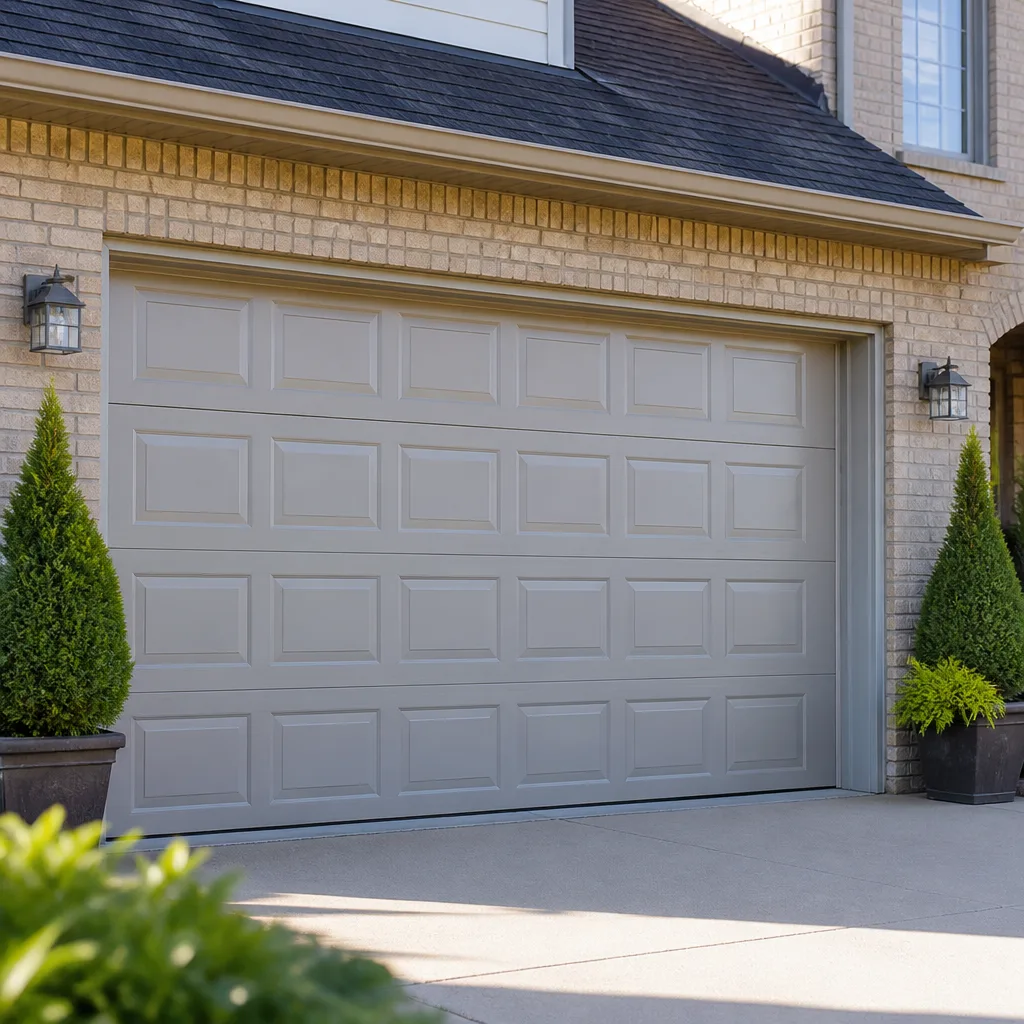 Raised-panel steel
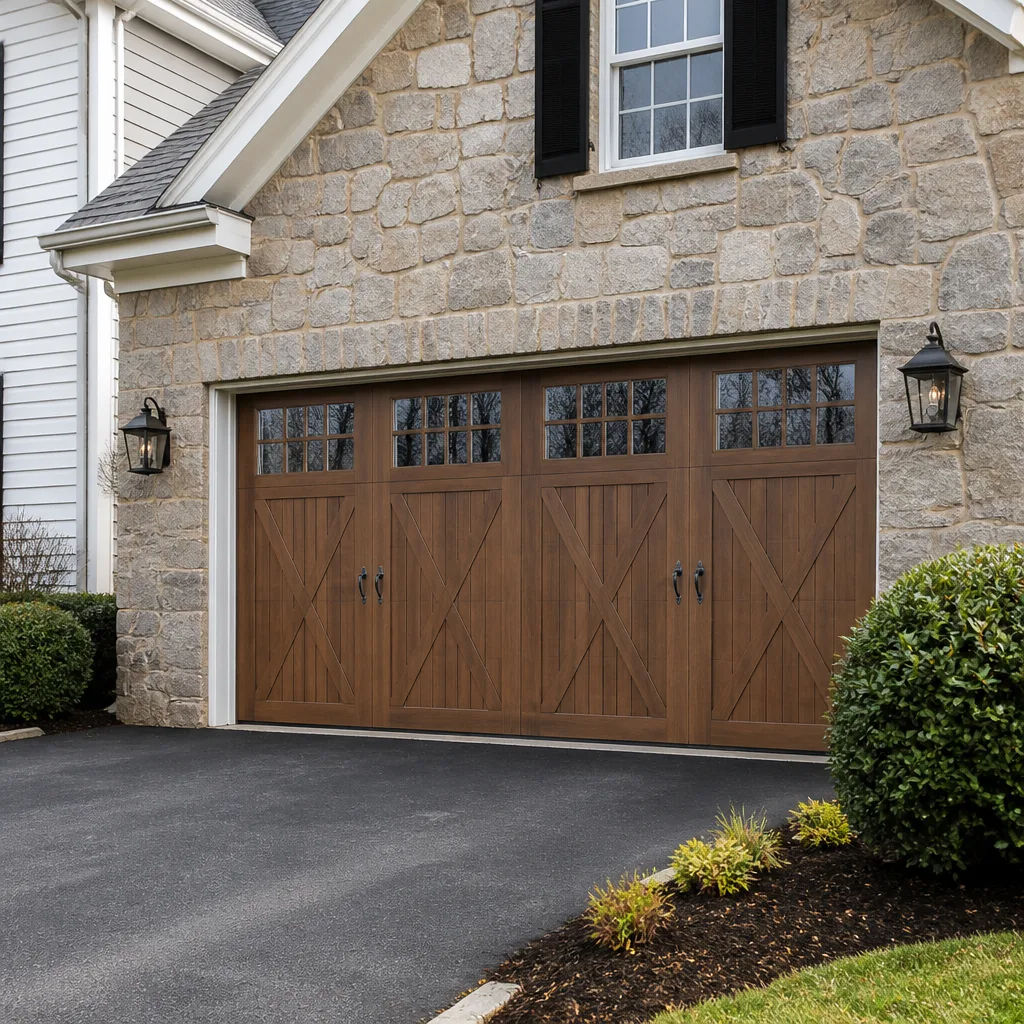 Carriage house
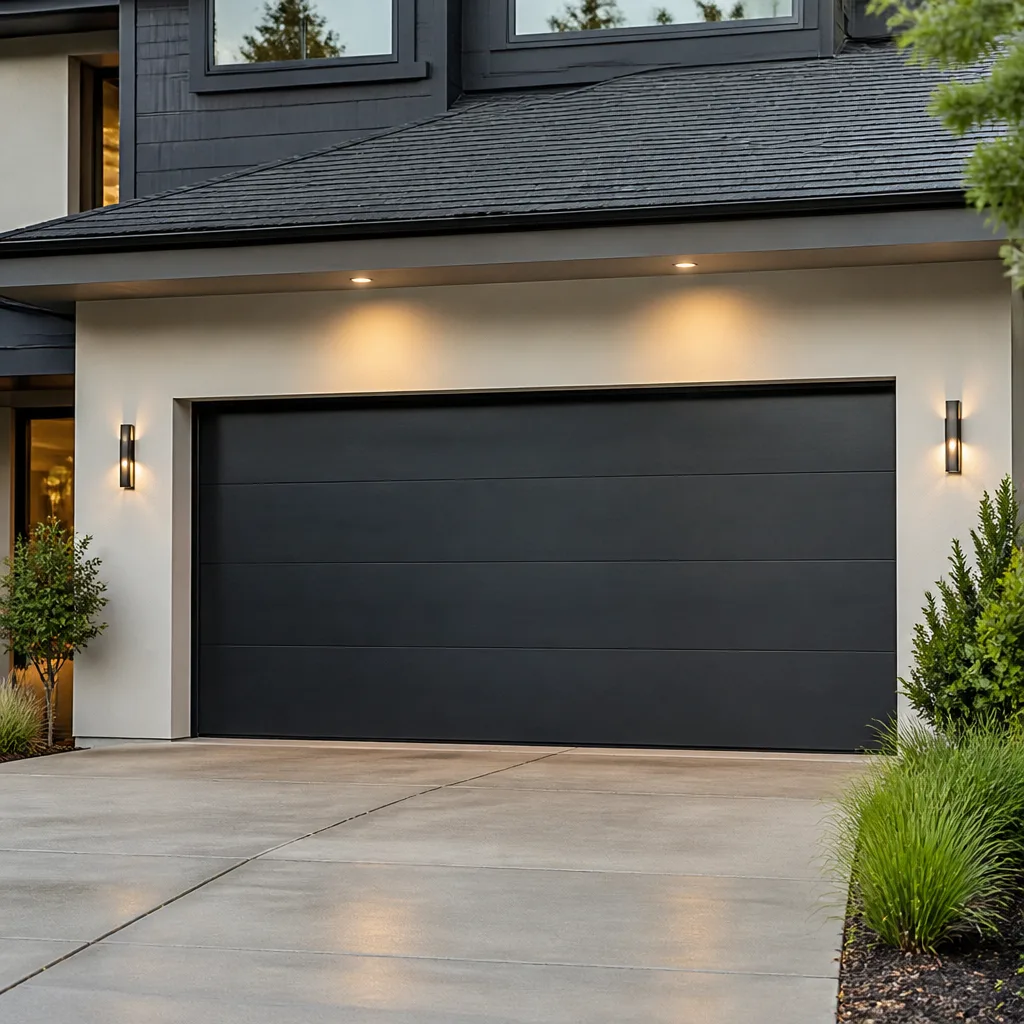 Modern flush
 Full-view glass
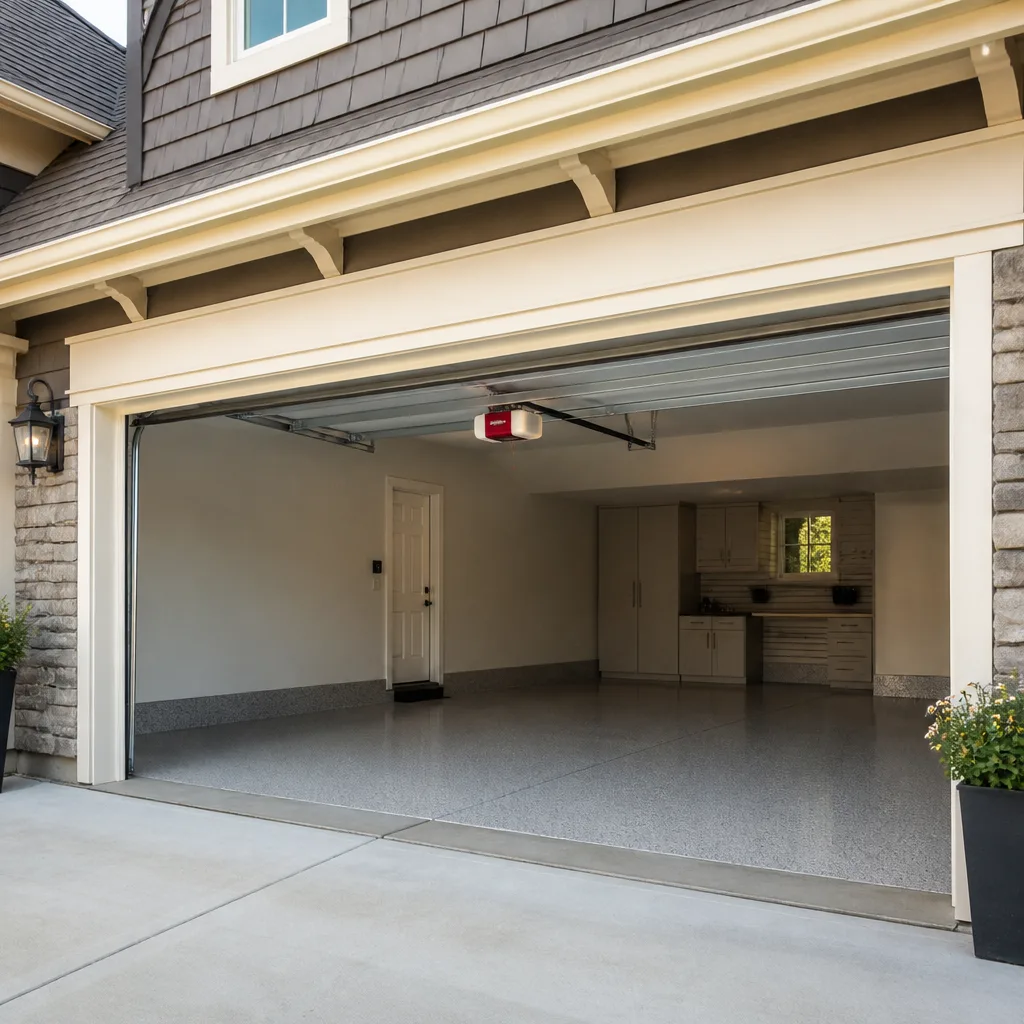 LiftMaster openers
 Chamberlain openers
Full 25-point door and opener safety check with every visit - springs, cables, rollers, tracks, and your LiftMaster or Chamberlain opener included
You get a price before we start. It does not change when the pro arrives.
Get your free estimateGarage Door Repair Maintenance Checklist for Noblesville Homeowners
Most garage door maintenance checklists online were written by marketing teams. They say “lubricate moving parts.” They don’t tell you that using WD-40 on springs is one of the fastest ways to accelerate metal fatigue, or that the white lithium grease in your garage is the wrong product for your rollers. A checklist only helps if it tells you what you’re looking for, not just what to touch. This guide gives Noblesville homeowners the actual visual and tactile benchmarks: what a worn spring looks like versus a failing one, what frayed cable strands feel like under a gloved finger, and how to run a balance test that tells you in 30 seconds whether your door is safe to keep operating. You’ll learn which tasks you can do yourself, which ones to leave alone, and how to log everything so a technician can diagnose faster and you can back up a warranty claim with real documentation.
Quick Answer
A garage door maintenance checklist for Noblesville homeowners covers four things: lubrication of the right components with the right products, a twice-yearly balance test, visual inspections of springs, cables, rollers and tracks, and a written maintenance log. Homeowners can safely handle lubrication, visual checks and the balance test. Springs, cables and any work involving torsion tension require a trained technician. In central Indiana’s freeze-thaw cycles, the inspection matters more than the lubrication, because temperature swings stress metal parts faster than steady climates do.
Styles & brands we work with
- Raised-panel steel
- Carriage house
- Modern flush
- Full-view glass
- LiftMaster openers
- Chamberlain openers
Table of Contents
- Why Noblesville’s Climate Makes Maintenance Different
- The Right Lubricant for Every Component (And the Wrong Ones)
- The Door Balance Test: How to Run It and What the Results Mean
- Visual Benchmarks: Springs, Cables, Rollers and Tracks
- DIY Tasks vs. Tasks That Require a Technician
- How to Keep a Maintenance Log That Actually Helps
- Brand-Specific Notes for Common Noblesville Doors
- A Seasonal Calendar for Central Indiana
Why Noblesville’s Climate Makes Maintenance Different
Noblesville sits in central Indiana, where the garage door goes through more temperature cycles in a year than the same door would in a milder climate. Summer humidity swells wood doors and works into hinges. Winter cold contracts metal and stiffens grease. Then spring arrives with freeze-thaw cycles that push the door through dozens of expansions and contractions over a few weeks. That cycling is what fatigues torsion springs, loosens fasteners and opens hairline cracks in cable sheathing.
If your garage is attached and unheated, the door and opener experience the full outdoor temperature range. If it’s insulated or heated, the swing is smaller, but the door still moves the same number of times per day. Usage, not just climate, matters. A household with two drivers coming and going several times a day puts more cycles on a spring than a household where the garage is used once in the morning and once at night.
What this means for a maintenance checklist in Noblesville: inspect more often than the generic “once a year” advice suggests. Twice a year is a reasonable floor for visual checks, and quarterly if your door gets heavy daily use. The neighborhoods around the White River see more humidity than out toward the county line, so homes near the river should pay closer attention to hinge corrosion and track rust.
The good news is that most of what fails can be caught early with a flashlight and ten minutes. The parts that fail without warning are the ones under tension, and those are exactly the ones no homeowner should be handling anyway. For anything that falls into that category, garage door repair is a call, not a project.
The Right Lubricant for Every Component (And the Wrong Ones)
This is where most checklists fail. They say “lubricate” without saying what to use, and the result is a homeowner spraying WD-40 on torsion springs, which strips the factory-applied lubricant and leaves bare metal exposed to moisture. WD-40 is a penetrating oil and water displacer. It is not a lubricant for high-tension steel.
Here’s the right product for each component:
- Torsion and extension springs: A dedicated garage door spring lubricant or a silicone-based spray. Never WD-40, never motor oil, never grease. Springs need a thin protective film, not a coating that traps grit.
- Hinges: White lithium grease or a silicone spray. Lithium grease stays put and handles the pivoting motion well.
- Rollers: Silicone spray for nylon rollers. For steel rollers, a light lithium grease on the bearing, not on the roller surface itself, which would attract dust and grind against the track.
- Tracks: Nothing. Tracks should be wiped clean and left dry. Lubricant on a track collects debris and causes the rollers to drag.
- Opener chain or belt: Chain-drive openers take a specific chain lubricant. Belt-drive units generally don’t need lubrication at all. Check your manual for the specific brand before applying anything.
The one product that should never touch your door is general-purpose WD-40, despite the fact that it’s the first thing most homeowners reach for. It displaces the good lubricant that’s already there, then evaporates, leaving the metal drier than it started. We’ve seen this hundreds of times on service calls around Noblesville, and it’s one of the few maintenance mistakes that actively shortens the life of a part.
When we service a door, we use a specific product for each component, and we take a minute to explain why. If your opener is due for a tune-up, garage door opener repair covers the mechanical side of this, including the chain or belt and the travel limits.
The Door Balance Test: How to Run It and What the Results Mean
The balance test is the single most underused maintenance tool available to homeowners, and it takes under a minute. It tells you whether your springs are doing their job or whether your opener is dragging a door that’s become too heavy for it. A door that fails this test can burn out an opener motor, and a door that’s gotten heavier than the springs can support is one that can slam shut.
Here’s how to run it safely:
- Disconnect the opener. Pull the release handle (usually a red cord hanging from the trolley) so the door moves by hand only.
- Raise the door to about waist height, roughly halfway open.
- Let go. Don’t push it, don’t guide it. Just let go.
- Watch what it does. It should stay put, or drift no more than a few inches on its own.
- Test the closed position too. Lower the door about a foot from the floor and let go.
- Reconnect the opener by running it until the trolley re-engages.
What the results mean:
- Door stays in place at waist height and 1 foot up: Balanced. The springs are doing their job.
- Door drops quickly from waist height: Spring tension is too low or a spring is broken. The door is running heavier than it should, which strains the opener and creates a fall hazard.
- Door rises on its own from waist height: Tension is too high, or the springs were wound incorrectly. This is more dangerous than it sounds, because the door can travel fast enough to cause injury.
- Door rises from the 1-foot position: Improper tension or a misadjusted track. Don’t keep operating the door until it’s checked.
Run this test in spring and again in fall. The results in October often differ from the results in April, because cold weather changes how the metal behaves. If the door fails the test, stop using it and call a technician. Do not try to adjust torsion springs yourself, even if a video online makes it look straightforward. Those springs are under extreme tension, and a mistake with the winding bars can cause serious injury. The tools to do it correctly aren’t sold at a hardware store, and the knowledge to do it safely takes years to build.
Visual Benchmarks: Springs, Cables, Rollers and Tracks
A visual check only helps if you know what “bad” looks like. Here are the specific benchmarks to look for, component by component.
Springs
A healthy torsion spring is a continuous coil of evenly spaced steel. A worn spring shows one of three things:
- A visible gap in the coil. That’s a broken spring. Even a small gap means the spring has failed. Stop using the door.
- Rust streaks or pitting on the wire. Surface rust is cosmetic; pitting where the metal looks pockmarked is not. Pitting creates stress points and is what leads to a break.
- Uneven coil spacing. If some coils are tight and others are spread apart, the spring has lost tension unevenly. It’s on its way out.
Extension springs (the ones that run alongside the door on older installations) need a different check. Look for stretched springs where the coils no longer sit tight against each other. Extension springs should also have a safety cable running through them; if there isn’t one, ask a technician to add one.
Cables
Run a gloved finger along the cable. It should feel smooth and round. What to look for:
- Frayed strands sticking out of the cable, like a frayed rope. Even one broken strand is a warning sign.
- Kinks or bends that don’t spring back. A kinked cable can snap under tension.
- Rust staining at the drum where the cable winds. Rust on the cable itself is a problem, not just on the drum.
- Sagging cables that no longer sit taut against the drum. This usually means the tension is off.
Cables are under the same tension as springs. A frayed cable is a call-a-professional situation, not a duct-tape situation.
Rollers
Rollers should spin freely by hand. A roller that wobbles, grinds, or has visible flat spots on the wheel needs replacement. Nylon rollers typically get noisy before they fail. Steel rollers with worn bearings tend to grind against the track and leave a shine mark on the inside of the track where the metal has been scraped. That shine mark is a sign the roller is dragging.
Tracks
The track should be straight and evenly spaced. What to look for:
- Visible dents or bends in the vertical or horizontal track.
- Uneven gap between the track and the door on the left versus the right side.
- Loose bolts on the track brackets. Give them a turn by hand; if they move easily, they need tightening.
- Debris in the track channel. A single pebble or leaf can cause the door to jump.
If the track is bent, don’t try to bend it back. Track bends are hard to reverse correctly and easy to make worse. A track that’s out of alignment will wear the rollers and eventually the door panel.
DIY Tasks vs. Tasks That Require a Technician
The line between these two categories isn’t about difficulty. It’s about what happens if something goes wrong.
Safe to do yourself:
- Lubricating springs, hinges, rollers and the opener chain or belt
- Running the balance test
- Visual inspections of springs, cables, rollers and tracks
- Tightening bolts on the brackets and hinges by hand
- Cleaning the track with a dry cloth
- Replacing a light bulb in the opener
- Testing the safety reverse feature by placing an object in the door’s path
- Keeping a maintenance log
Requires a technician:
- Any work involving torsion springs or extension springs
- Cable replacement or adjustment
- Track straightening or realignment
- Roller replacement on a door that’s under tension
- Opener adjustment beyond the basic travel limits described in the manual
- Panel replacement
- Anything that requires the door to be raised and held in an unusual position
We want to be direct about the spring category: torsion springs hold enough stored energy to break bones, and the tools required to wind them safely are not standard homeowner tools. There is no safe shortcut. We’re happy to walk a Noblesville homeowner through the balance test over the phone, and we’ll tell you honestly when a symptom is a DIY fix versus when it needs a technician. If the door is stuck right now, Noblesville Garage Door Repair is the number to call.
How to Keep a Maintenance Log That Actually Helps
A maintenance log sounds like busywork until a part fails and you need to prove when it was installed, or you need to check whether the door is still under a manufacturer warranty. Most garage door warranties require documented maintenance, and the manufacturer won’t honor a claim without records. So this section is not just for the next technician. It’s for you.
Here’s a format that works:
- Date and mileage equivalent. Write down the date and the number of door cycles since the last entry. If you don’t want to count cycles, note roughly how many times the door opens and closes per day. A daily count is enough to estimate.
- What you did. “Lubricated torsion springs and hinges with silicone spray.” Be specific about the product.
- What you observed. “Balance test: door stays put at waist height. No visible spring gap. Right-side cable looked smooth.”
- What you didn’t do. “Didn’t lubricate opener chain, will do next time.” This matters because it tells a future technician what state the door is likely in.
- Who did the work. If a technician serviced the door, note the service and the date. If you did it yourself, note that too.
Take a photo of the door label or the manufacturer’s plate on the opener at the start. It lists the model number, which saves a technician time on a diagnostic call. For any brand-specific parts (a Craftsman opener from the mid-2000s, for example, or a Raynor door with a discontinued panel style), that label is what lets us order the right part before we arrive rather than after.
When you call us, we’ll ask what you’ve observed and what’s in your log. Homes that have a log tend to get diagnosed on the first visit more often, because the symptoms are documented rather than remembered vaguely. That’s not a selling point so much as a practical advantage of keeping records.
Brand-Specific Notes for Common Noblesville Doors
We work on LiftMaster, Chamberlain, Genie, Clopay, Amarr, Wayne Dalton, Craftsman and Raynor systems, and the maintenance checklist isn’t identical across brands. Here are the differences that actually affect what you do:
- Chamberlain and LiftMaster openers (the two are made by the same manufacturer) use MyQ connectivity on most modern models. If the opener isn’t responding to the app, the maintenance checklist item is to check the Wi-Fi module before assuming the motor has failed. A weak Wi-Fi signal in the garage is one of the most common causes of “the opener is broken” calls.
- Craftsman openers from older installations often have a chain drive that needs specific chain lubricant. The chain on older models is one of the few components where a good product and the wrong product make a visible difference within a year.
- Raynor doors frequently use a proprietary hinge and roller configuration, which means parts aren’t interchangeable with other brands. If a roller needs replacing, the label inside the door tells the technician which replacement to bring.
- Clopay and Amarr panels have specific panel profiles on many models. A panel dented by a car in a Noblesville driveway may not be replaceable with a universal panel, so note the model before calling.
The pattern is consistent: the model label is the single biggest time-saver on a diagnostic call. If you can find it and read it, you’ve made the repair faster.
A Seasonal Calendar for Central Indiana
The generic advice is “check your door once a year.” In central Indiana, a seasonal schedule works better because the temperature swings change what’s likely to go wrong.
- Early spring (after the last hard freeze): Run the balance test, inspect springs for new cracks or a visible gap, check the cable ends for fraying caused by winter contraction. This is the highest-value inspection of the year.
- Late spring: Lubricate hinges and rollers. Check the track for debris left over from winter, and check the weather seal at the bottom of the door for cracks or tears.
- Midsummer: Check hinges and bolts for loosening caused by heat expansion. If the door is wood, check for swelling at the panel edges.
- Early fall: Run the balance test again. Inspect the opener chain or belt. Check the opener’s light and safety sensors, and test the reverse feature.
- Late fall (before the first freeze): Lubricate everything that will stiffen in the cold. This is when the door needs the most attention, because a door that operates smoothly in October can seize by December.
If you follow this schedule, you’ll catch most wear before it becomes a breakdown. The repair budget is far smaller than the replacement budget, and maintenance is what keeps you on the right side of that line.
Common Mistakes to Avoid
- Spraying WD-40 on springs. It strips the lubricant that’s already protecting the metal and leaves the spring worse off. Use a spring-specific lubricant or a silicone spray instead.
- Ignoring a balance test failure. A door that won’t hold its position is telling you the springs are failing. Running it anyway strains the opener and creates a safety hazard; stop using the door until it’s checked.
- Bending a track back into place. What looks like a simple bend usually changes the geometry of the track just enough to wear out the rollers. Let a technician check it.
- Assuming a non-responsive opener means a new opener. In Noblesville, a lot of “dead opener” calls turn out to be a power issue, a sensor alignment problem or a Wi-Fi connection issue on a LiftMaster or Chamberlain unit. The motor is often fine.
- Lubricating the track. Tracks stay dry. Lubricant on a track turns it into a debris magnet.
- Skipping the maintenance log. When a warranty claim comes up, the log is the difference between a covered part and a bill.
- Not looking for the model label before calling. Every diagnostic call goes faster when the technician knows the brand and model, and it avoids a second visit for parts.
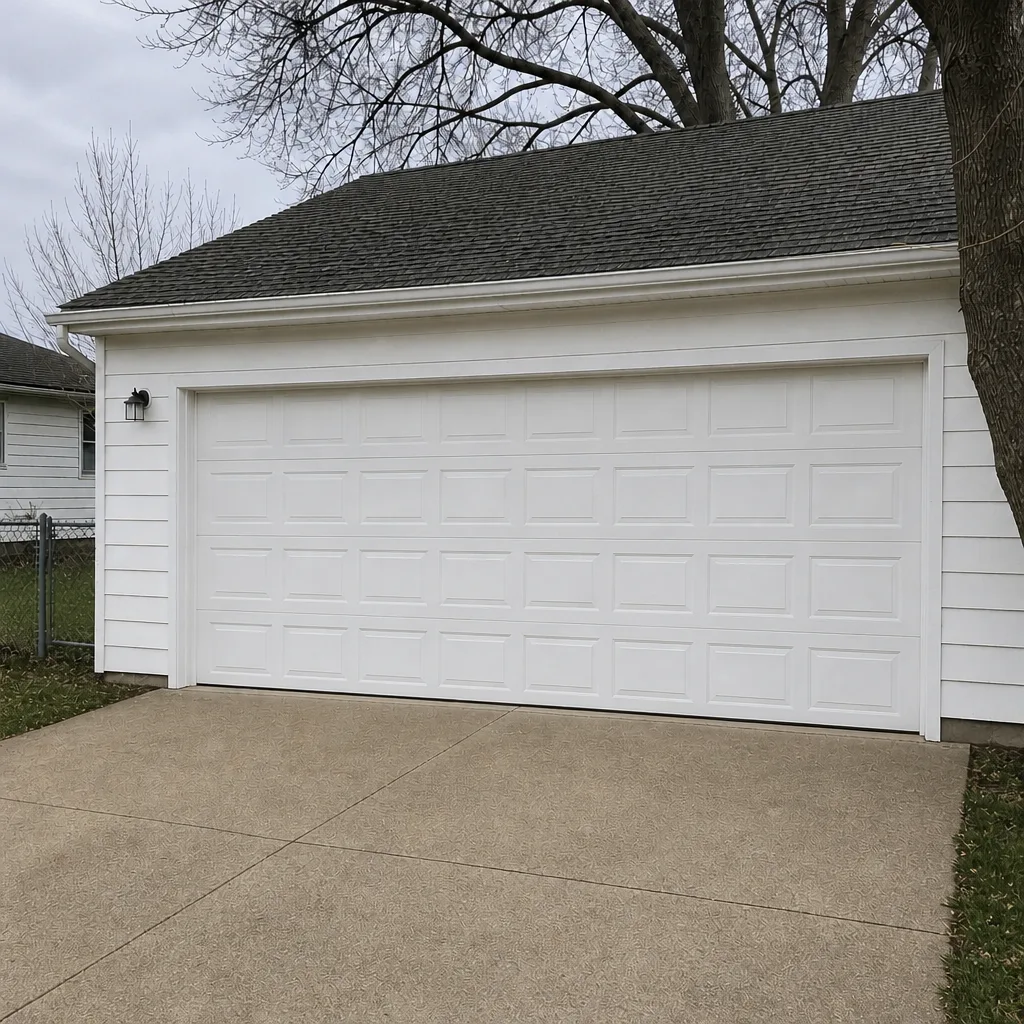
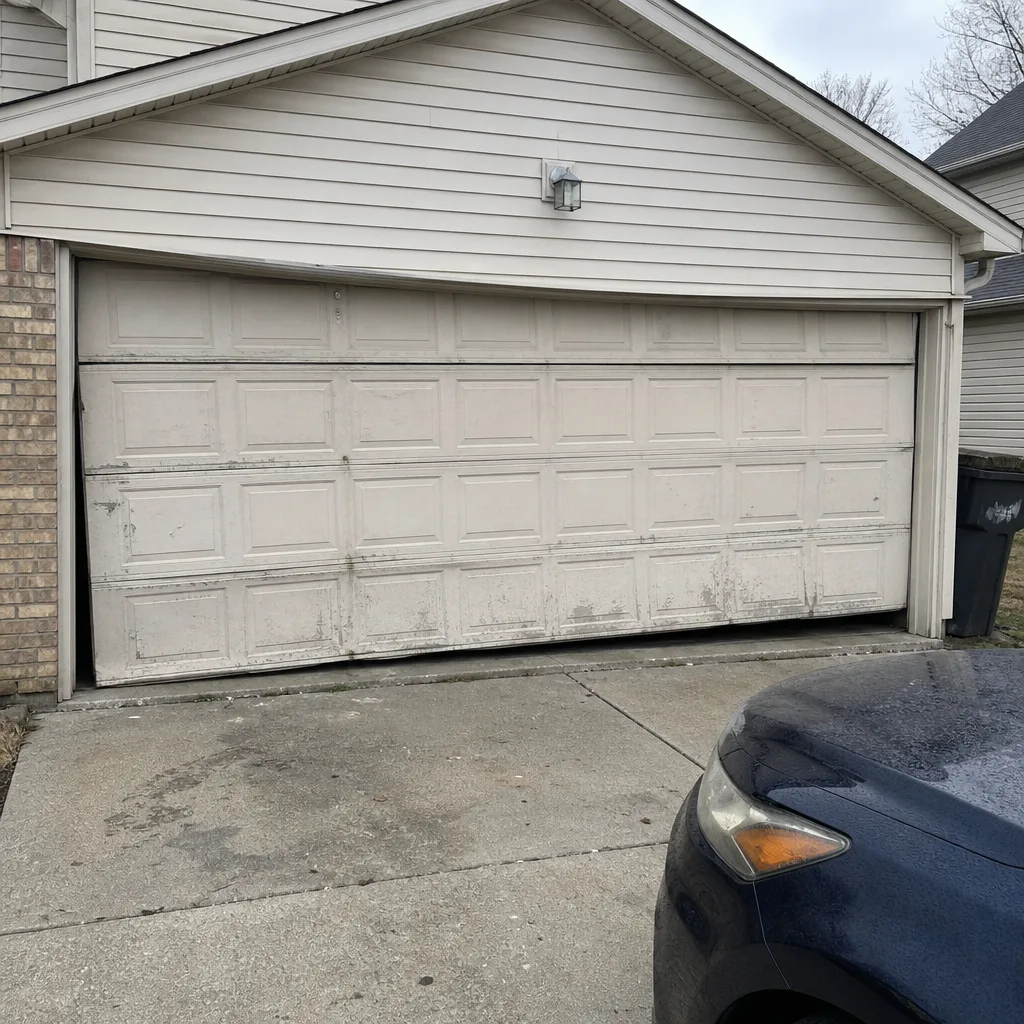
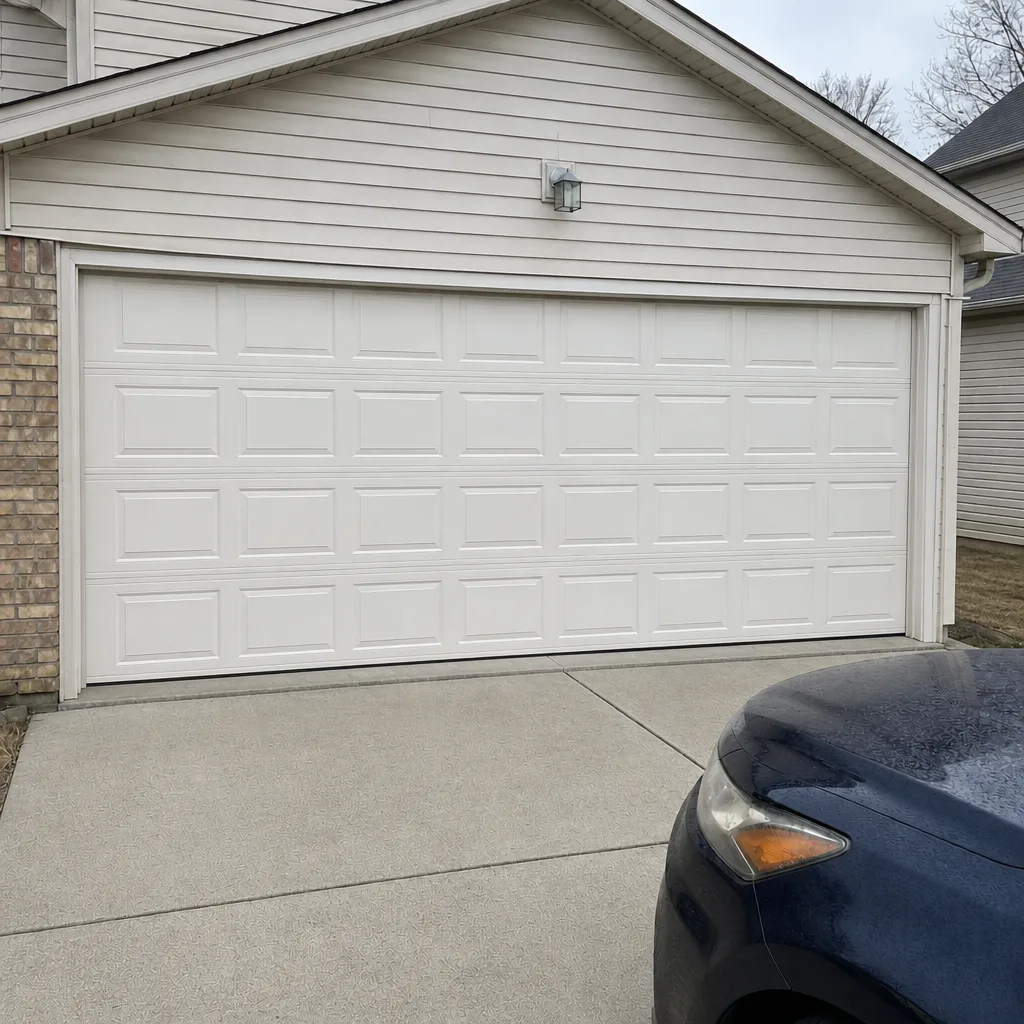
See the difference
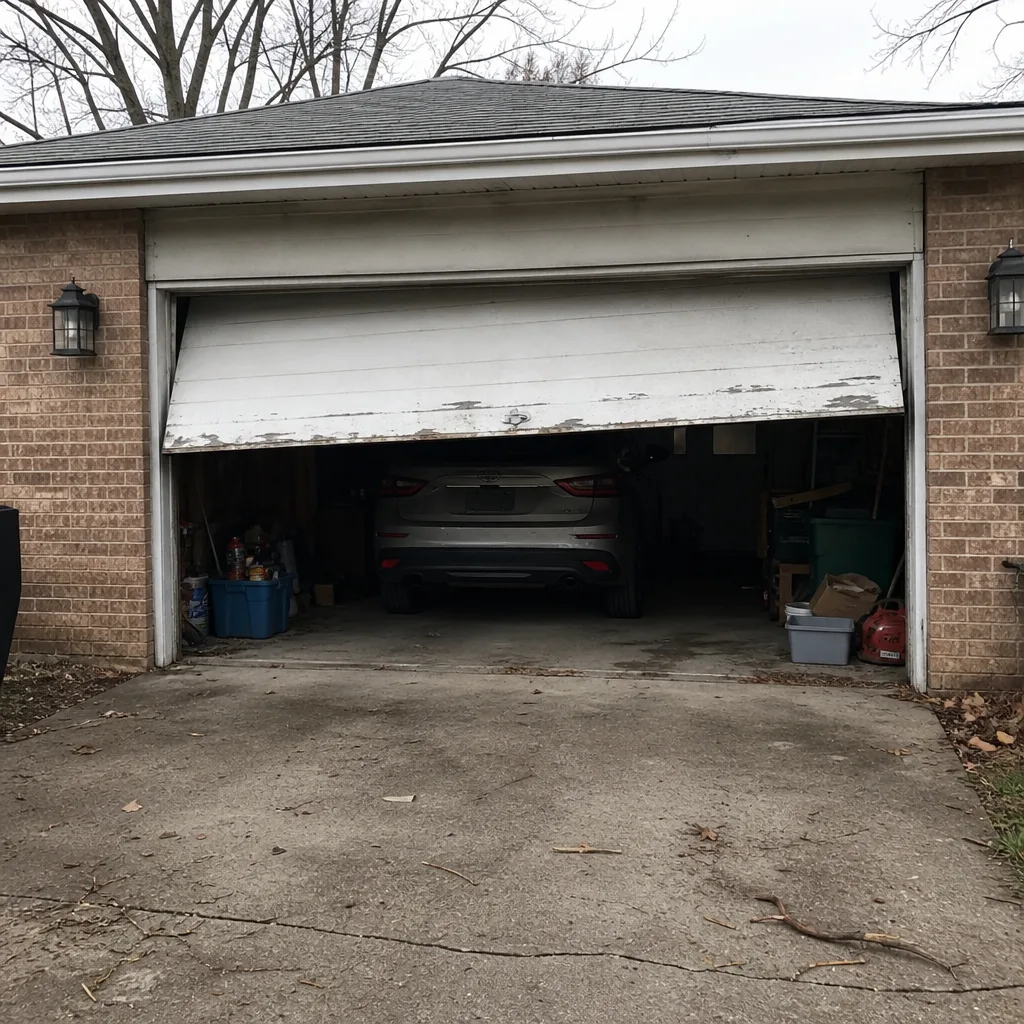 Before
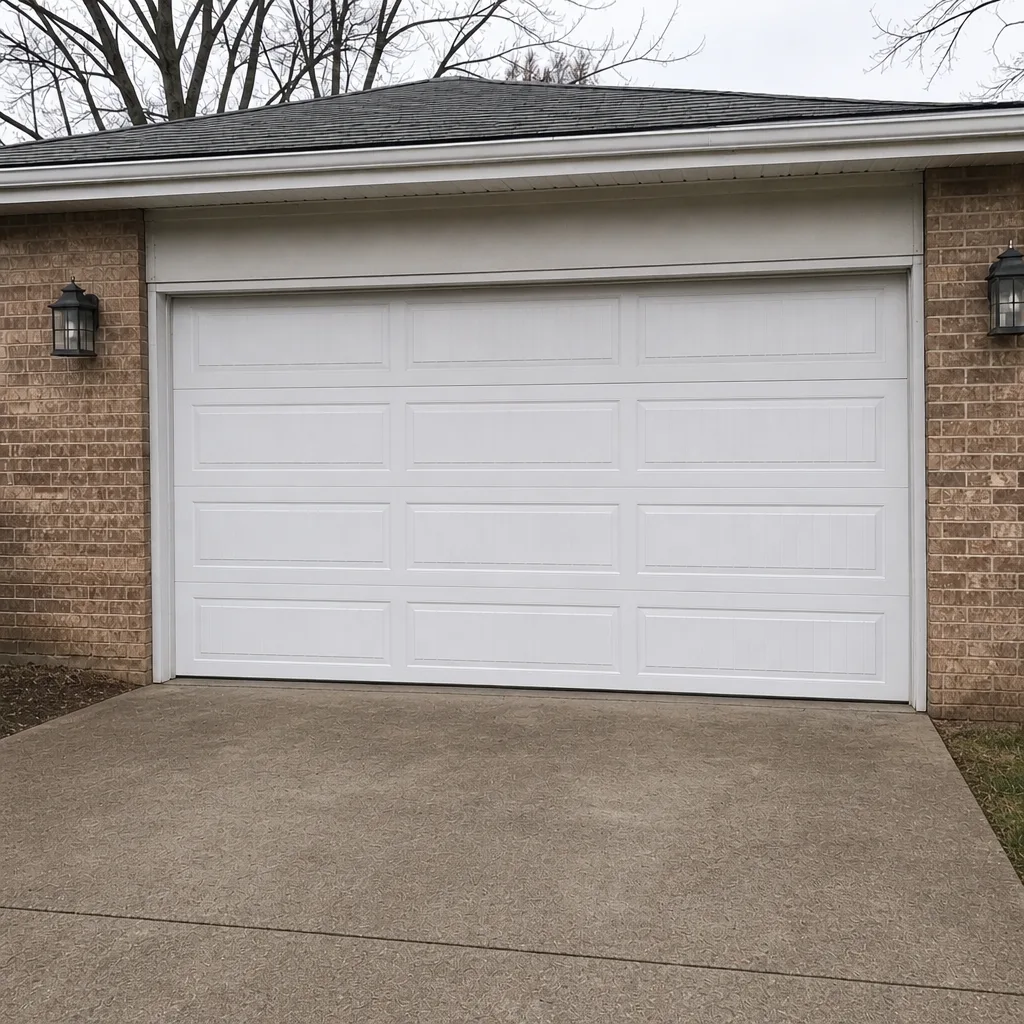 After
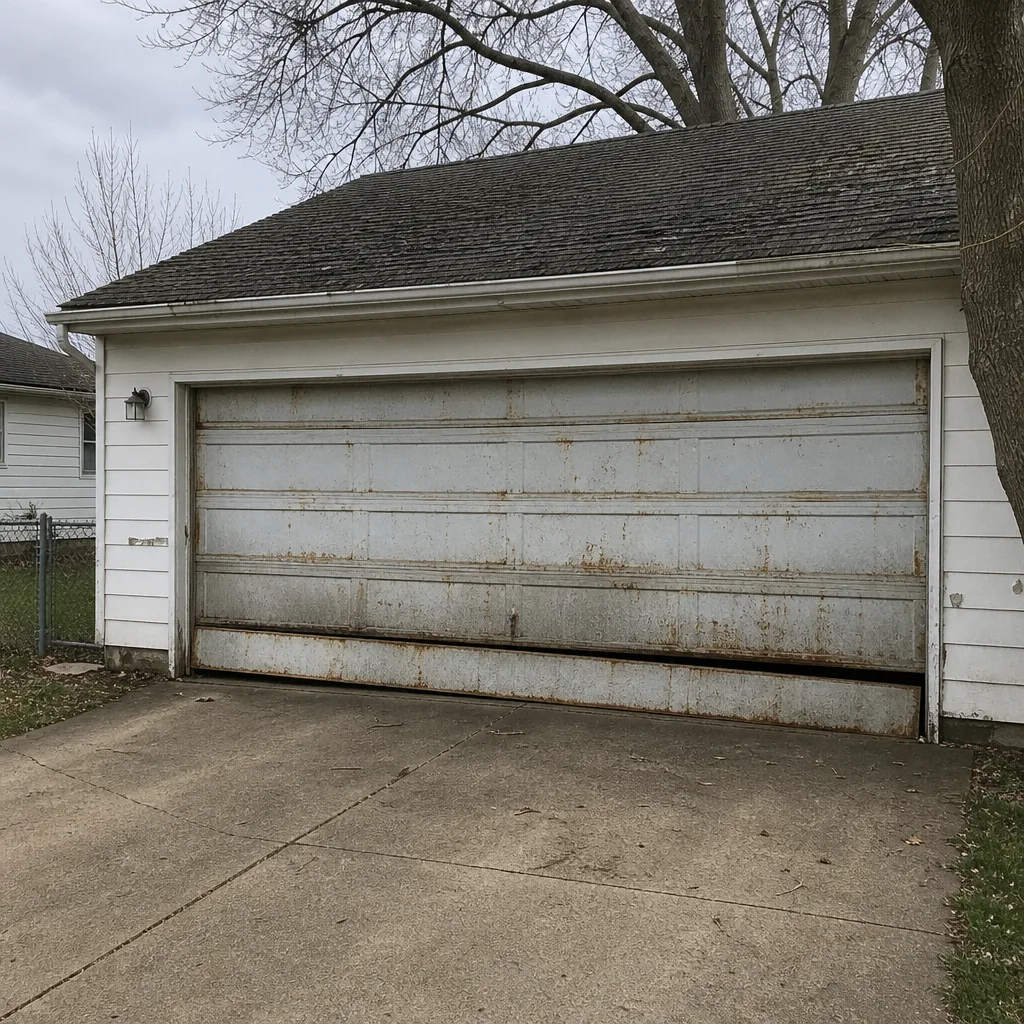 Before
 After
 Before
 After
When to Call a Professional
Some symptoms mean the checklist is done and the phone is next. Call us if any of these are true: a spring has a visible gap or a rust pit that looks deep; the cable is frayed, kinked or sagging off the drum; the balance test fails; the door is making a grinding or popping sound you haven’t heard before; the opener runs but the door won’t move, or moves unevenly; the track looks bent or the door is misaligned in the opening. If the door is stuck, jammed, or off its track, don’t force it. Report what you see and we’ll send out a technician to look. Our technicians have up to 9 years of experience with LiftMaster, Chamberlain, Genie, Clopay, Amarr, Wayne Dalton, Craftsman and Raynor systems, and spring repair is one of the jobs we handle directly rather than referring out.
Noblesville Garage Door Repair offers free estimates in Noblesville. Call (844) 747-6072. We answer 24/7. Fast dispatch from 7am to 7pm, Sunday through Friday. Any work is quoted and agreed in writing before it starts, so the price you’re given is the price you’ll be billed. For a new door or opener rather than a repair, garage door installation covers the measuring, ordering and setup side of the work.
Frequently Asked Questions
Twice a year is a reasonable minimum in Noblesville, with quarterly checks if the door gets heavy daily use. Central Indiana’s freeze-thaw cycles stress springs and cables faster than a steadier climate, so spring and fall are the two inspections that matter most. The first one, after the last hard freeze, is the most valuable of the year because it catches winter damage before it becomes a breakdown.
Use a spring-specific lubricant or silicone spray on torsion and extension springs, white lithium grease or silicone spray on hinges, and silicone spray on rollers. Never use WD-40 on springs: it displaces the protective lubricant and leaves bare metal exposed. Tracks should not be lubed at all. When in doubt, check your manual, and if the label is missing, call us and we’ll tell you what to use for your specific brand.
No. Torsion springs hold stored energy that can cause serious injury, and the tools and training required to wind them safely aren’t part of a DIY kit. Extension springs carry similar risk. Spring repair is a technician job, and it’s one we handle directly for Noblesville homeowners rather than referring out. If you’re seeing a visible gap or a rusty pit in the spring, stop operating the door and call us.
Most manufacturer warranties require documented maintenance but don’t require a professional to perform every task. Lubrication and visual inspections done by a homeowner are usually fine. What voids a claim is missing maintenance records, or work done incorrectly (like WD-40 on springs). Keep a log, and you’re on the right side of the warranty. When you call, we can look at your log and help you figure out what a claim needs.
Cold weather stiffens the grease in hinges and rollers, contracts the metal in the track and reduces spring efficiency. A door that runs fine in summer and drags in January is usually a lubrication and adjustment issue, not a failing spring. Get the fall lubrication done before the first freeze and you’ll avoid most of the winter stiffness. If the door won’t move at all in the cold, call us before forcing it.
Yes, same-day service is usually available for a stuck or jammed door. Call (844) 747-6072 for an exact time. We answer 24/7. Fast dispatch from 7am to 7pm, Sunday through Friday. A call outside dispatch hours is booked into the next opening. The estimate is free, and the price is quoted and agreed before any work starts.
The Bottom Line
Garage door maintenance isn’t complicated, but it is specific. The checklist only works if you know what you’re looking at: a spring with a visible gap, a cable with a frayed strand, a door that won’t hold its position in the balance test. Twice a year, run the balance test and do a visual inspection. Use the right lubricant for each component, and never WD-40 on springs. Keep a written log so the next technician can diagnose faster and so you can back up a warranty claim. Handle the safe tasks yourself. Call a professional for springs, cables, tracks and anything that changes the door’s geometry. Noblesville Garage Door Repair offers free estimates in Noblesville: call (844) 747-6072, and we’ll help you sort the safe check from the call that’s worth making.
Written by the team at Noblesville Garage Door Repair.