
Last updated November 21, 2026
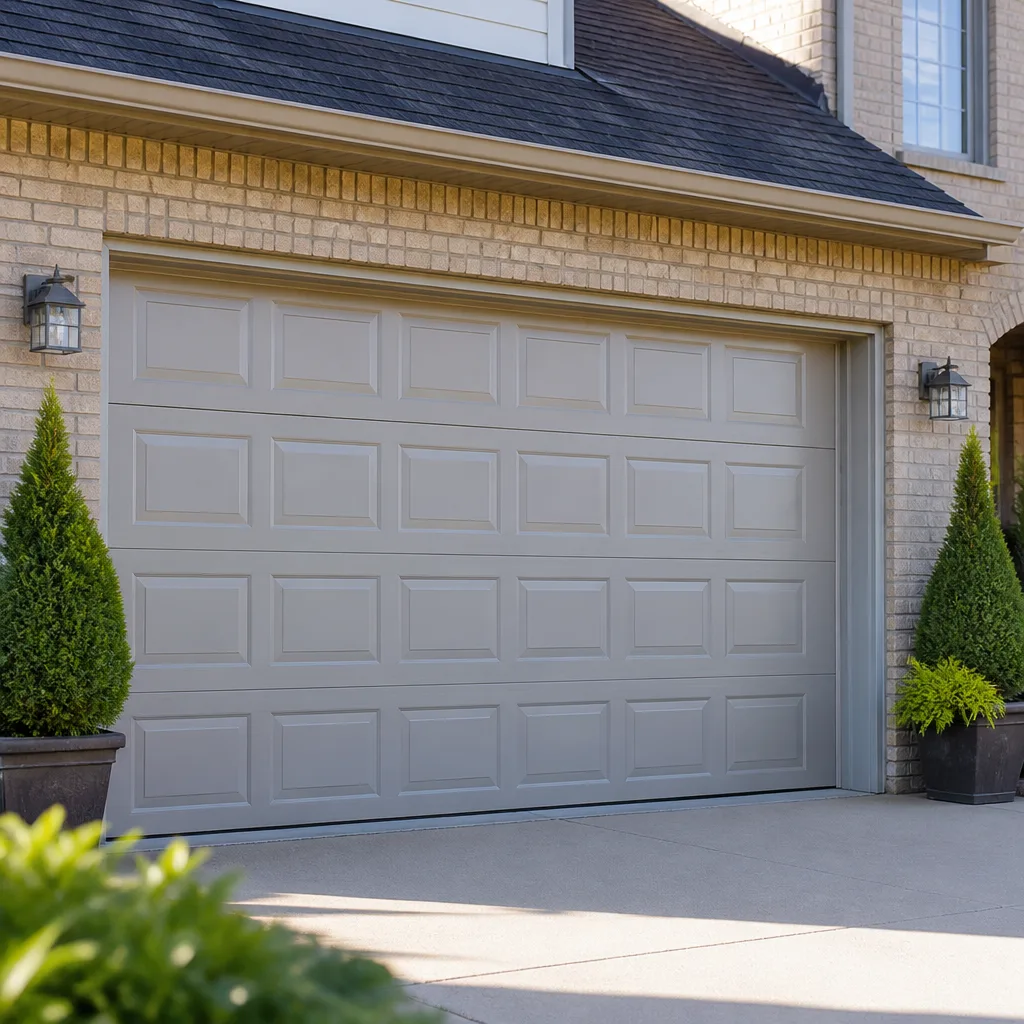 Raised-panel steel
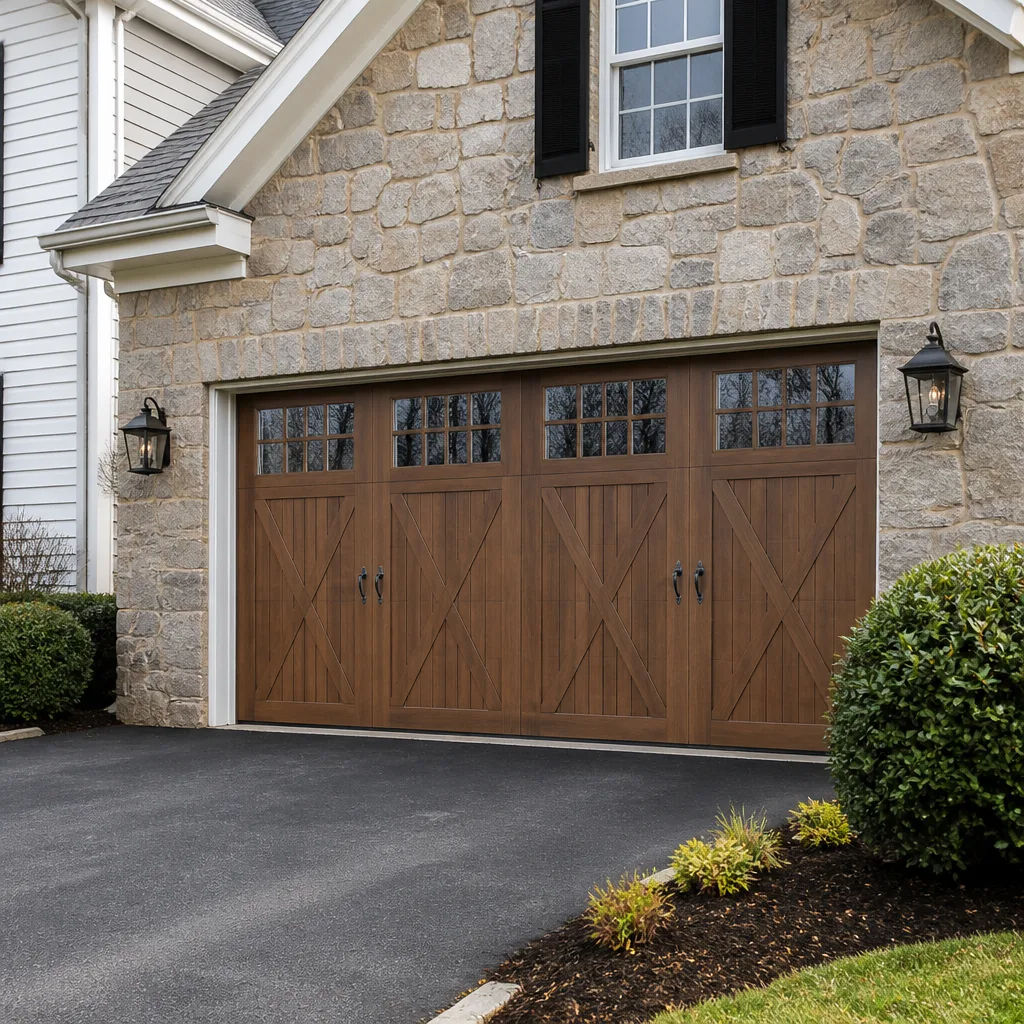 Carriage house
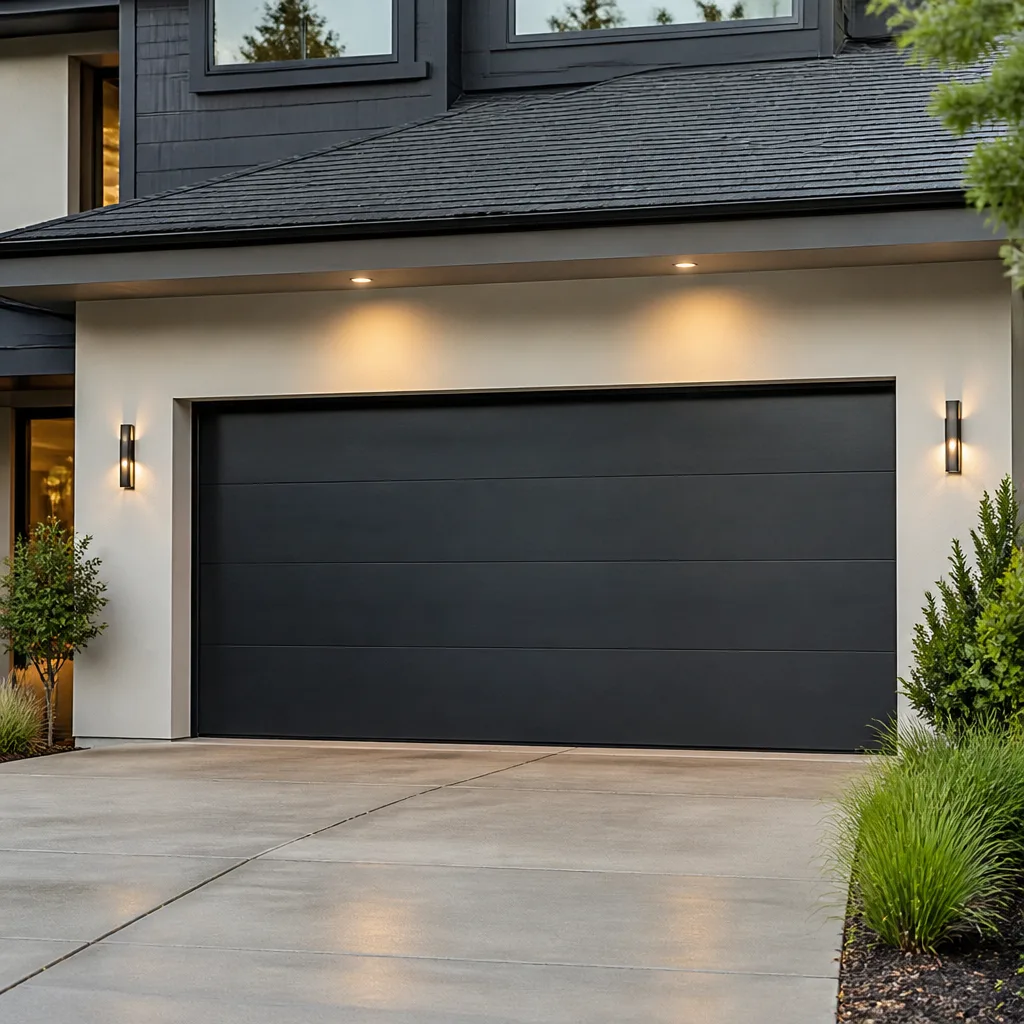 Modern flush
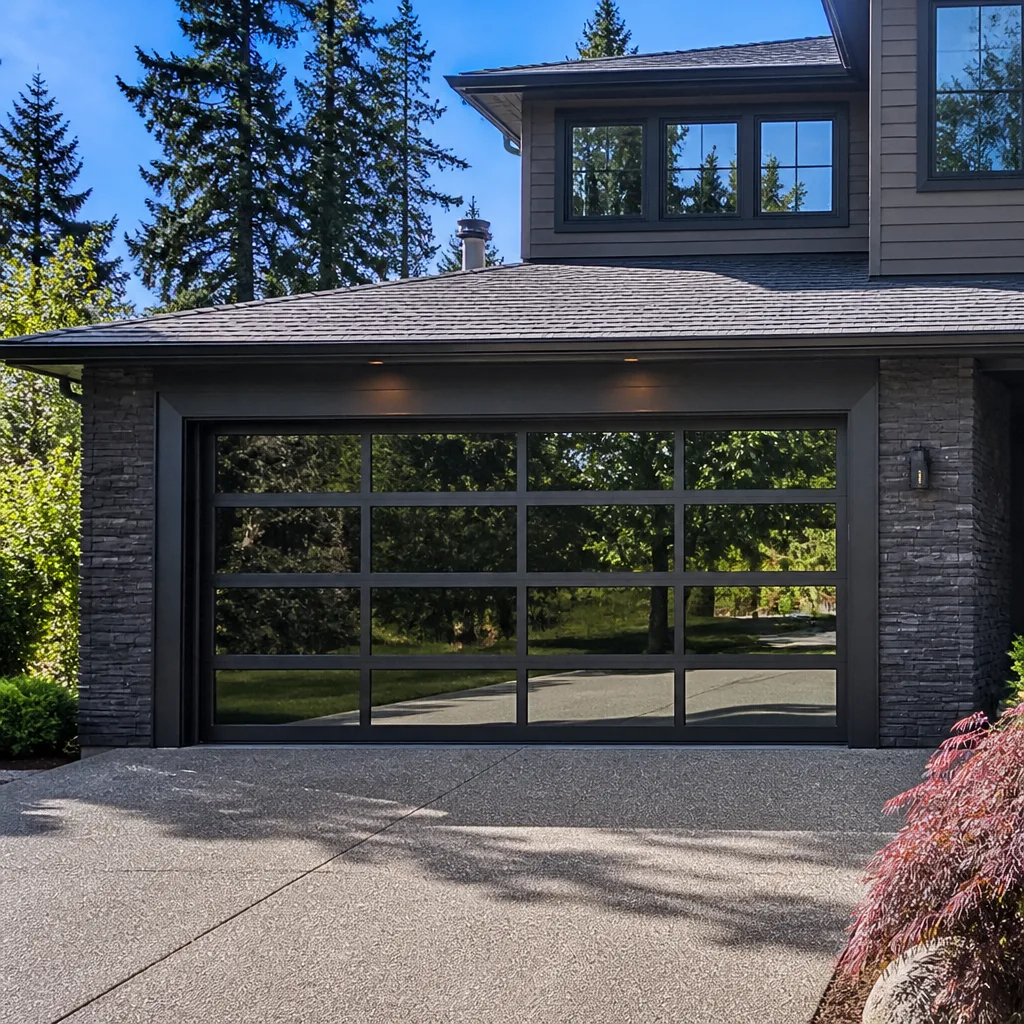 Full-view glass
 LiftMaster openers
 Chamberlain openers
Full 25-point door and opener safety check with every visit - springs, cables, rollers, tracks, and your LiftMaster or Chamberlain opener included
You get a price before we start. It does not change when the pro arrives.
Get your free estimateSeasonal Garage Door Care for Noblesville: Year-Round Homeowner’s Guide
Most homeowners treat garage door care as one job in late fall: rake the leaves, blow out the sprinklers, and give the door a quick look. That order is backwards for central Indiana. The failure that matters most in Noblesville happens in deep winter, when the grease in the torsion system stiffens, the steel contracts, and the opener pulls against a door that suddenly weighs more than it did in October. By the time January cold settles in, a door that was fine in summer can be one cycle away from a snapped spring. This guide maps each season’s real risks here, with temperatures, humidity, and freeze-thaw cycles as the calendar, so you know what to check and when.
Quick Answer
Garage door care in Noblesville follows the local weather, not a generic to-do list: winterize torsion and opener settings before the first hard freeze, control summer humidity that warps wood panels and swells seals, prep tracks and hardware in fall ahead of freezing nights, and check alignment after spring thaw heaves the concrete. The single most important habit is a monthly balance and lubrication check, because most emergency calls we handle trace back to a door that was quietly running out of adjustment for weeks.
Styles & brands we work with
- Raised-panel steel
- Carriage house
- Modern flush
- Full-view glass
- LiftMaster openers
- Chamberlain openers
Table of Contents
- Why Seasonal Care Works Differently in Noblesville
- Winter: When Spring Failure Risk Peaks
- Summer: Humidity, Wood Panels, and Seals
- Fall Prep Checklist: Beat the First Freeze
- Spring: What Freeze-Thaw Does to Your Tracks
- Opener Settings That Prevent Seasonal Burnout
- Your Twelve-Month Maintenance Routine
- Common Mistakes to Avoid
Why Seasonal Care Works Differently in Noblesville
Noblesville sits in a climate that swings hard between seasons. Summers run humid, with stretches where the air holds enough moisture to fog a window. Winters bring repeated drops into the teens and single digits. And the ground itself moves: clay-heavy soil expands when it holds water and shrinks when it dries, and the freeze-thaw cycle adds its own push. Your garage door sits at the edge of all of it, mounted on a slab that shifts and hanging from springs that react to every degree. That’s why seasonal care around here has to be timed to actual conditions instead of copied from a national checklist. A door that handles a mild winter fine can fail in a colder one, and the difference usually comes down to preparation. We work on garage doors across Noblesville all year, and the patterns repeat: fall adjustments that were skipped become winter emergencies, and summer seal problems turn into fall drafts. Learning those rhythms takes less time than you’d think, and it saves you from the worst of them.
What Your Door Is Actually Doing
A sectional garage door is a balancing act. The springs carry most of the weight, the opener mostly steers, and the tracks keep everything in line. When one part drifts out of spec, the others take the strain. That’s the whole reason seasonal care matters: it catches drift before it compounds.
Winter: When Spring Failure Risk Peaks
Garage door springs snap most often when temperatures drop below 20°F, and the reason is a chain of small effects. Cold stiffens the lubricant on the torsion bar, so the coil doesn’t unwind smoothly. The steel itself contracts, tightening tolerances. The opener, sensing more resistance, pulls harder to move the door. Add those together on a January morning in Noblesville and you get the classic failure: a loud bang from the garage, a door that won’t lift, and a car stranded inside.
How to Pre-Empt Winter Spring Failure
You can’t inspect a torsion spring the way you check tire pressure, but you can reduce the load it carries going into the cold. Do these in late November or early December, before the first deep freeze:
- Lubricate the springs, hinges, rollers, and the torsion bar with a garage-door-specific lubricant. Household oil and WD-40 don’t hold up in cold and can attract grit.
- Test the balance of the door with the opener disconnected. If it won’t stay roughly halfway open, the springs are already under-adjusted or worn, and cold makes that worse.
- Listen for a sharp creak or grind on the first cold morning. New noise in freezing weather usually points to a lubrication or adjustment problem, not a failing part, but it tells you the system is straining.
- Check that the door opens smoothly by hand before you trust the opener. If it feels heavy, resolve that before the cold gets worse.
Springs are under extreme tension. Adjustment, replacement, and anything that involves winding or unwinding a torsion or extension spring is work for a trained technician with the right tools. That’s the work our garage door repair service handles routinely, and it’s why we treat spring work as a specialty rather than a general handyman job. If your door already feels wrong in the cold, don’t wait for it to fail. Call (844) 747-6072. We answer 24/7.
Summer: Humidity, Wood Panels, and Seals
Noblesville summers bring humidity that does slow damage to garage doors, especially wooden ones. Wood absorbs moisture through the exposed edges of panels, and that absorption causes two problems at once: the wood swells, and the finish starts to break down. A Clopay or Amarr wood and wood-composite door that looked tight in May can show warped panels, raised grain, and sticking sections by August. Steel and aluminum doors don’t warp the same way, but their weatherstripping does. Vinyl and rubber seals take on moisture and swell, then pinch and tear as the door cycles against them.
What to Do in June Versus August
June is the time to check the seals, before the humidity climbs. Run a hand along the bottom seal and the perimeter strips. Any spot that’s brittle, cracked, or pulled away from the frame will let water in during summer storms. Replace those sections early, and you’ll head off the swelling that makes them grip the door by late summer.
By August, your focus shifts to the panels and finish. Look for bubbling paint, soft spots near the bottom of the door, and any edge that’s starting to separate. Wood doors hold up best when the finish stays intact, so touch up exposed wood before the wet season returns. For steel doors, that same pass is a good time to check the bottom edge for rust, which tends to start where the seal has been holding water against the panel. A door that’s already too far gone is a replacement question, not a repair one, and our garage door installation work covers that end to end when the time comes.
Humidity Effects by Door Type
- Wood and wood-composite: Swelling at panel edges, finish breakdown, binding sections.
- Steel: Rust along the bottom edge where moisture sits against the seal.
- Aluminum: Usually stable, but seals and exposed fasteners take the humidity load.
- Weatherstripping: Swells, binds, and tears at the threshold and frame.
Fall Prep Checklist: Beat the First Freeze
The first freeze in central Indiana usually arrives in late October or early November, and once it does, the ground and the hardware both harden. Getting your door ready before that date is the difference between a smooth winter and a rough one. A generic “before winter” reminder doesn’t help unless it’s timed to actual conditions, so work backward from the first hard frost you expect in Noblesville.
Your Fall Checklist, in Order
- Balance test. Disconnect the opener and lift the door halfway. It should stay put with light effort. If it drops or won’t hold, springs or hardware need attention before cold.
- Lubricate everything that moves. Torsion springs, hinges, rollers, and the track bends get a garage-door lubricant. Do this before temperatures drop, so the protection is already in place.
- Inspect the weather seal. Look for tears, gaps, and hardening along the bottom seal and the perimeter. Cold makes brittle seals crack rather than flex.
- Check the tracks for debris and alignment. Clear leaves and grit, and look for any bend or gap where the door doesn’t sit flush.
- Test the safety reverse. Put a box or board under the door and lower it. The door should reverse on contact. Test the photo-eye safety sensors by blocking them and confirming the door won’t close.
- Schedule an adjustment if anything feels off. A door that hesitates or jerks in fall will struggle more in the winter cold.
Fall is also the season to check hardware tightness. Cold contraction loosens bolts just enough to rattle, and a rattle in November can mean a misaligned track by December. A quick pass with a wrench on the hinge and bracket bolts is worth the ten minutes. If you’d rather have this done as part of a service visit, our team can handle it during a garage door repair call, and we’ll flag anything else that’s nearing its end before winter sets in.
Spring: What Freeze-Thaw Does to Your Tracks
When the ground thaws in early spring, the soil under your garage slab does its own moving. Clay-rich soil in the Noblesville area holds water and expands as it thaws, then settles as it dries out. That movement can shift the slab slightly, and a track that’s anchored to it shifts with it. Most of the time the change is minor. But repeated freeze-thaw cycles through a cold winter are exactly the kind of stress that can pull a track out of plumb, make a panel bind, or throw the door off its vertical line just enough to scrape the frame.
Spring Alignment Check
After the thaw, watch the door cycle through its whole travel by hand, with the opener off, and look for these signs:
- The door rubs or scrapes on one side of the frame more than the other.
- The gap along the bottom of the door is uneven from one end to the other.
- The vertical tracks have pulled away from the wall or the slab at the bottom anchor.
- Panels no longer line up cleanly, or the door shakes as it moves.
- The opener strains at a specific point in the travel, which often points to a bind near the problem spot.
Small alignment drift usually resolves with an adjustment. But tracks that have moved need to be re-set carefully, because a bent track that gets forced back can damage panels and rollers. If you see ground heave under the slab at the garage opening, that’s worth a close look before you run the opener again. A call to a technician is the safest route, and we can check the alignment as part of a standard visit. Call (844) 747-6072 for a free estimate. We answer 24/7.
Opener Settings That Prevent Seasonal Burnout
Your opener is the part of the system that gets blamed when the door is really the problem. An opener that’s set to compensate for a heavy, sluggish door will strain a motor far beyond its design. That strain shows up first as force and sensitivity settings drifting out of range, and then as a dead opener. Seasonally, this is why motor burnout tends to cluster in winter and again in the first hot weeks of summer, when the door is operating at its hardest.
Force Adjustment and Sensitivity
Most residential openers, whether a LiftMaster, a Chamberlain, or a Genie, use two settings that matter for seasonal change: the force adjustment, which tells the motor how hard to push, and the sensitivity or travel-limit setting, which governs when the opener reverses. In winter, a door that’s running stiff can trip the safety reverse because the motor senses resistance that looks like an obstruction. When that happens, people sometimes turn up the force to force the door through. That’s the wrong move. The force setting is a safety limit, and raising it masks the real problem, which is a door that’s too heavy for the opener to move cleanly. The right fix is to address the door: lubricate the springs and rollers, balance it, and correct any track problem. Then reset the force to the manufacturer’s guidance.
Our garage door opener repair service covers force and sensitivity issues across the brands that dominate central Indiana homes, and it’s often the part of the job that prevents a motor from being replaced altogether. If your opener is straining, reversing unexpectedly, or running hot, don’t crank the force up. Call us first.
Your Twelve-Month Maintenance Routine
The guide above covers the season-by-season risks. Put them together and you get a checklist you can follow on your own calendar, month by month. Here’s the sequence we’d give a homeowner in Noblesville who wants to see their door through a full year without surprises:
Month-by-Month
- January and February: Monthly visual check of springs and cables. Lubricate if the door sounds dry. Watch for any new noise on cold mornings and call if a loud bang or a stuck door shows up.
- March and April: Spring alignment check after the thaw. Look for track drift and uneven gaps, and test the safety reverse again.
- May: Inspect weatherstripping and seals for winter wear. Replace anything cracked or pulled away.
- June: Check seals for swelling and gaps before the humidity climbs. Clean and clear the tracks of grit and debris.
- July and August: Inspect wood and steel panel edges for moisture damage. Touch up finish on wood, and look for rust on steel along the bottom edge.
- September: Balance test and full lubrication pass. Tighten the hinge and bracket hardware.
- October and November: Fall prep checklist before the first freeze. Test safety reverse, check the photo-eye sensors, and schedule any adjustments before the cold locks everything in.
- December: Final cold-weather check: door cycles smoothly by hand, opener settings are correct, and nothing sounds dry or strained.
Quick Reference: What to Check When
- Every month: Listen for noise and oil the moving parts.
- Every season change: Run the full cycle by hand with the opener off.
- Before and after freeze: Check the springs, balance, and seals.
- After any storm or deep freeze: Check the track alignment and the safety reverse.
This routine is the backbone of our Noblesville Garage Door Repair work, and it’s why we can usually tell from a call what season it is by what’s failed. The routine isn’t hard, but it has to be done in the right order. If you’d rather not keep the calendar yourself, call us and we’ll walk through where your door stands.
Common Mistakes to Avoid
- Turning up the opener’s force setting to get through a stiff winter door. That setting is a safety limit. Raising it hides a weight or balance problem and pushes the motor harder than it should go.
- Using WD-40 or household oil on the spring and tracks. Those products don’t hold up in cold and can collect grit. A garage-door lubricant is what the system needs.
- Skipping the fall adjustment because the door “worked fine last winter.” Springs wear gradually, and the door you test in October is under more load by January. Check the balance every fall regardless.
- Ignoring a new track noise or a scrape in spring. Concrete heave from freeze-thaw is a real cause of track misalignment around Noblesville, and a small drift that gets ignored becomes a bent track and a damaged panel.
- Letting summer humidity sit on a wood door. Touch up the finish before the moisture settles in, or the swelling turns into warping that can’t be reversed.
- Assuming a reversing opener in cold weather means a bad motor. It usually means the door is running heavy. Address the door before you replace the opener.
- Attempting spring work yourself. Torsion and extension springs are under extreme tension. Adjustment or replacement is not a DIY repair, and the risk of serious injury is real.
See the difference
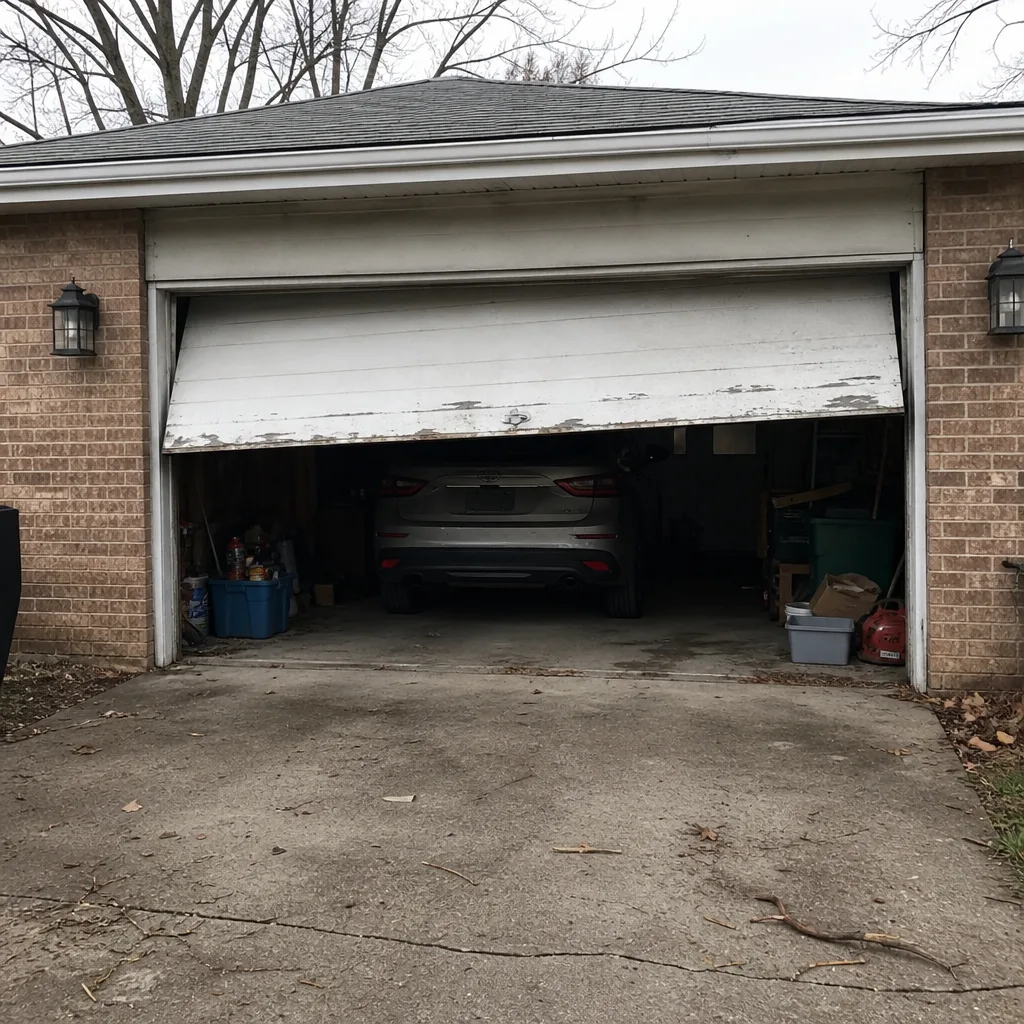 Before
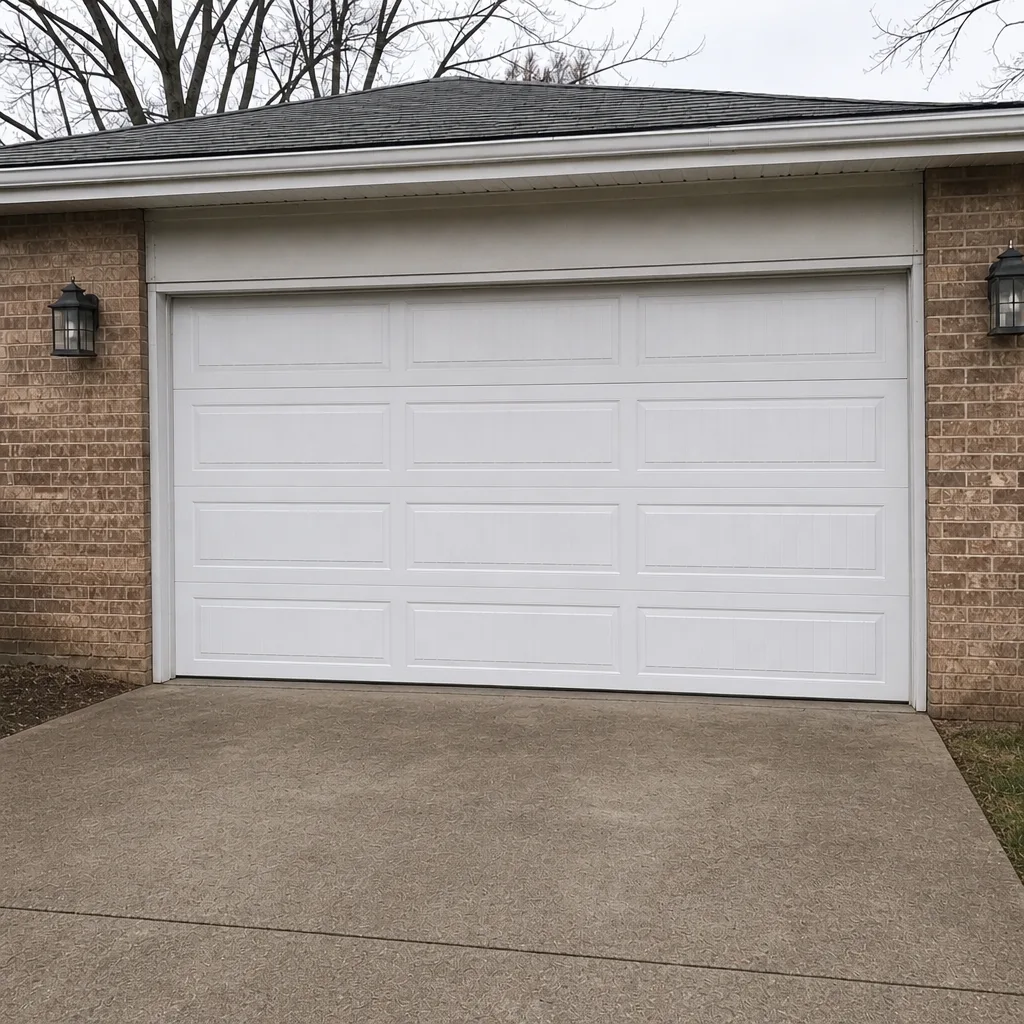 After
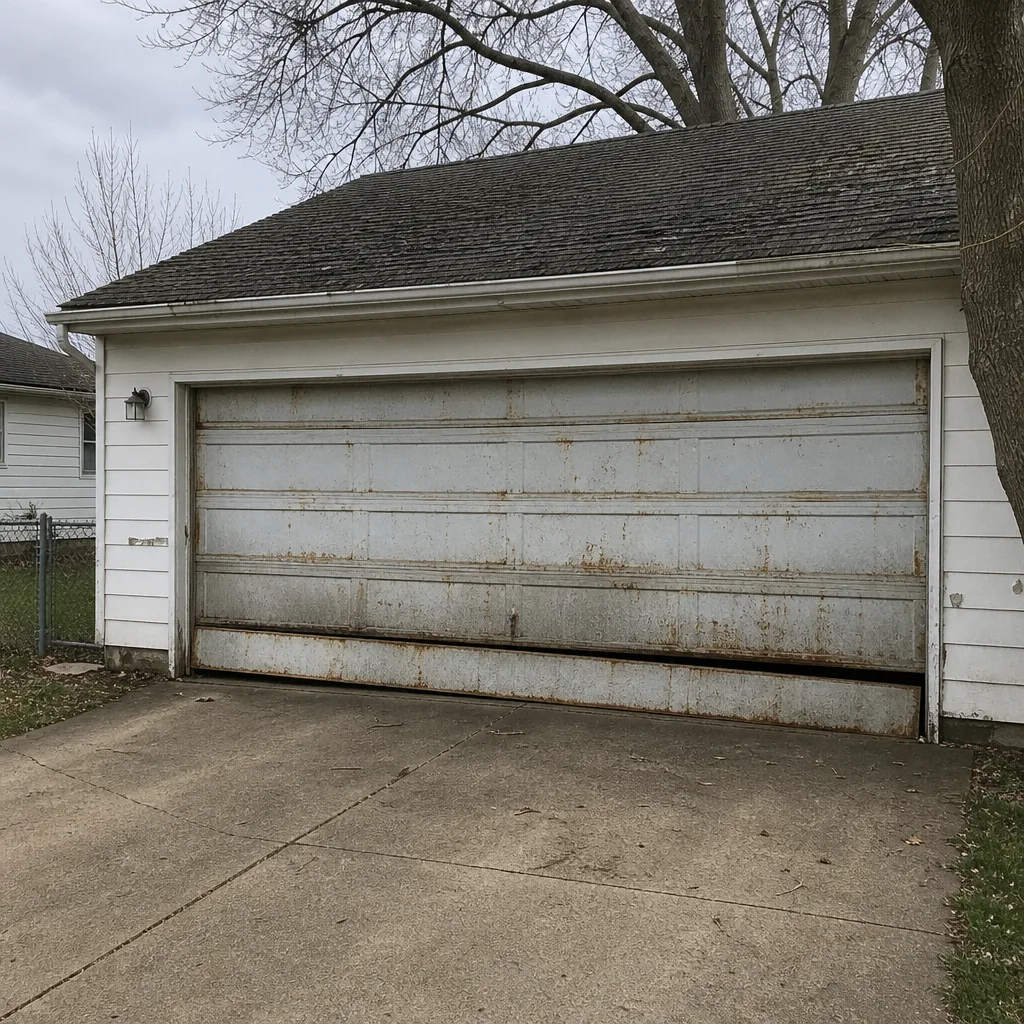 Before
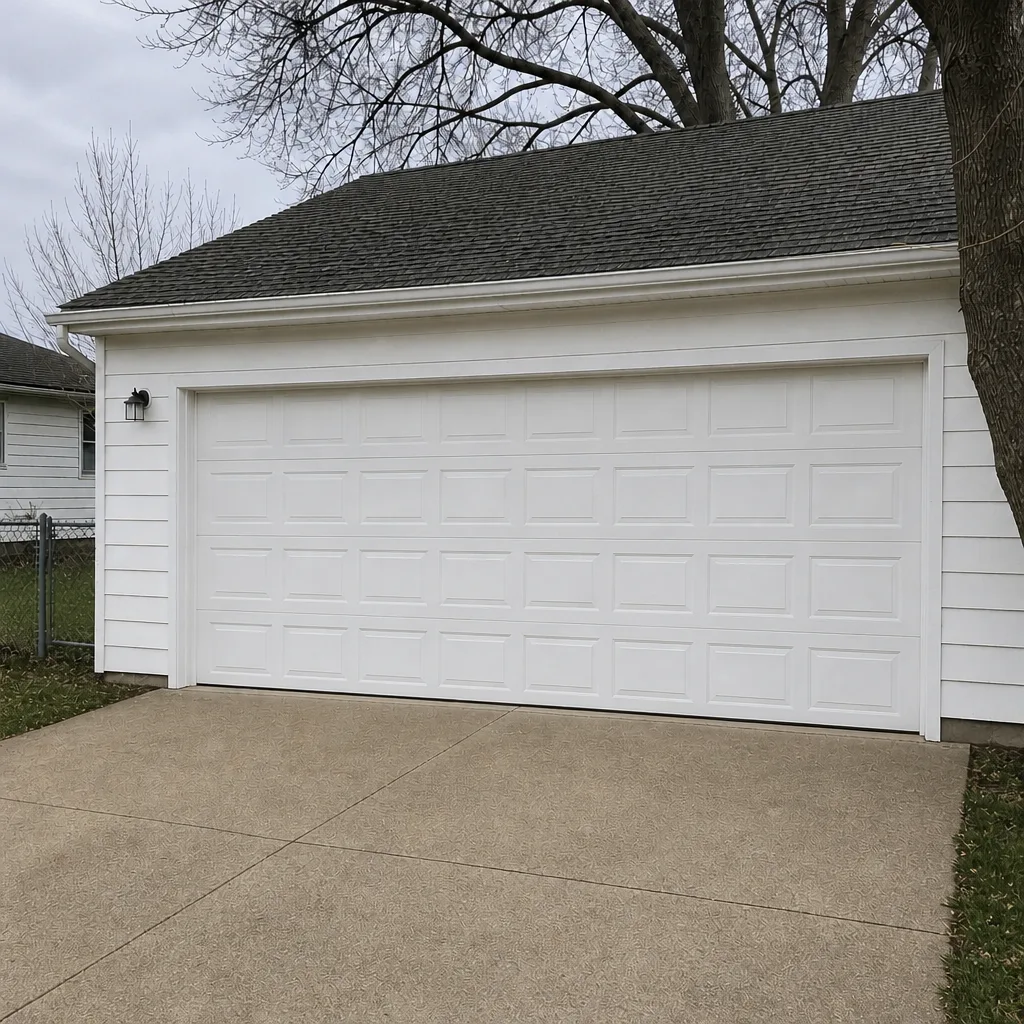 After
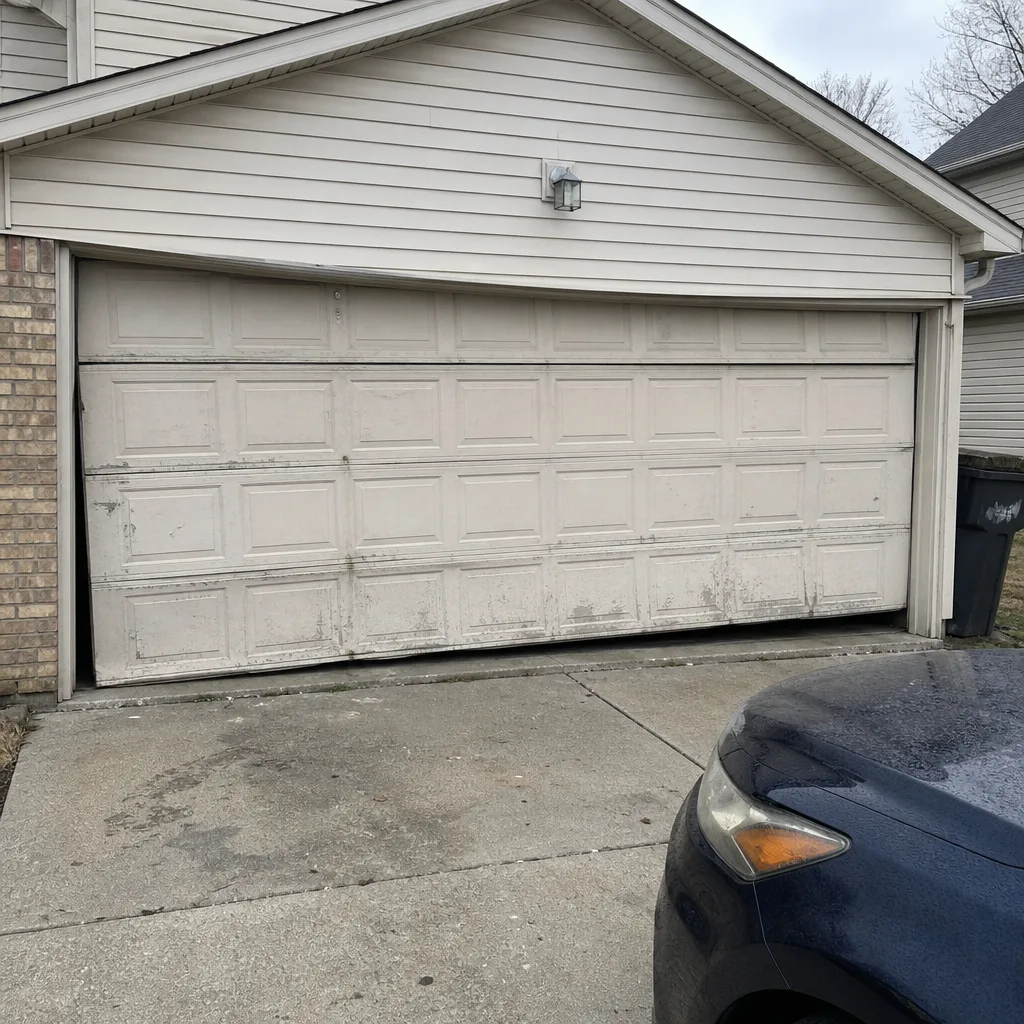 Before
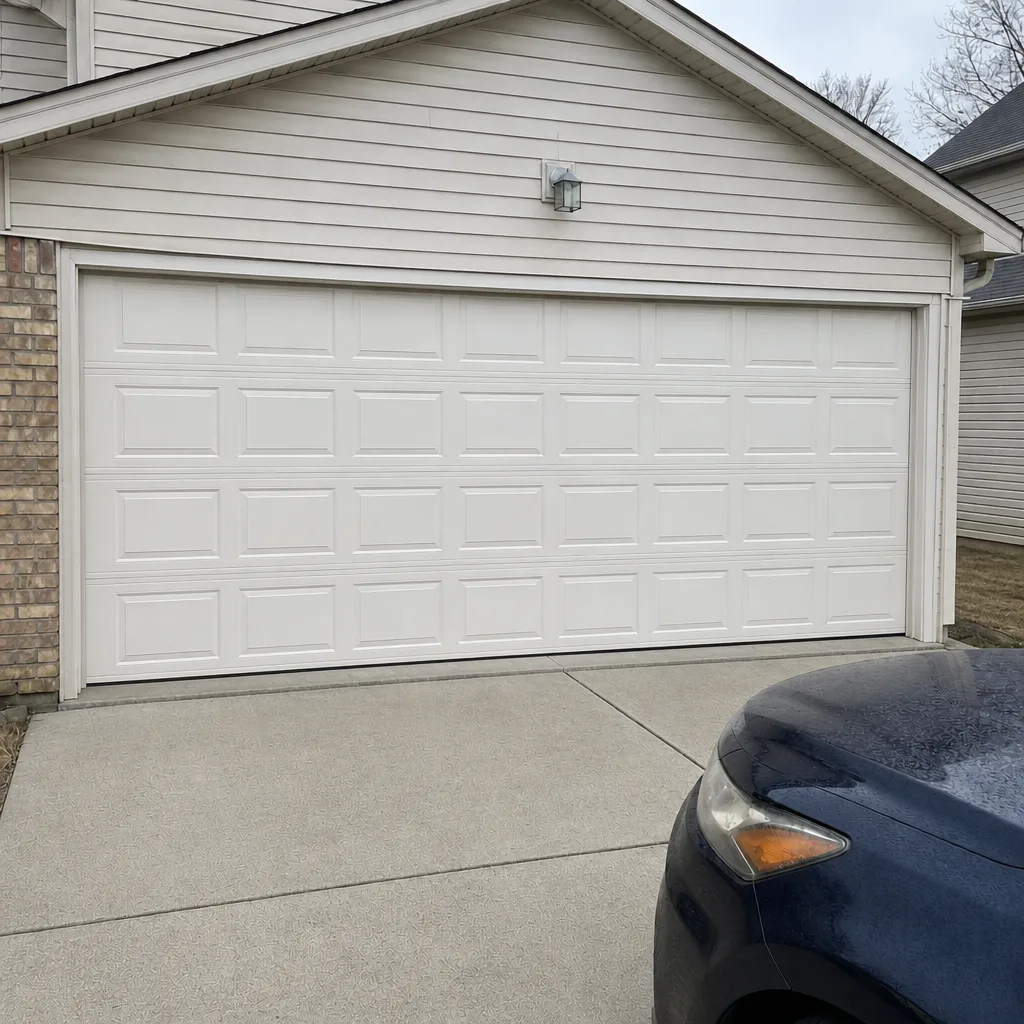 After
When to Call a Professional
Some seasonal checks are best done by hand, and some should go straight to a technician. Call us if any of these show up:
- A spring has snapped, or the door won’t lift at all.
- The door is visibly off its tracks or has shifted to one side.
- The opener reverses on its own or won’t respond to the remote.
- The safety reverse fails when you test it.
- The door feels heavier than usual, or the balance test shows it won’t hold halfway.
- You see rust, warping, or seal damage that’s spread beyond a quick fix.
- Your door needs a spring replaced, and you want it done safely.
Noblesville Garage Door Repair offers free estimates in Noblesville. Our technicians have up to 9 years of experience, and we handle repair, opener service, installation, spring work, and emergency calls as one specialty. Call (844) 747-6072. We answer 24/7. Fast dispatch from 7am to 7pm, Sunday through Friday.
Frequently Asked Questions
The most important item is a fall balance and lubrication check before the first freeze, because winter cold is when spring failure risk peaks. In practice, that means testing the door’s balance with the opener disconnected, lubricating the springs and moving parts, and inspecting the seals and tracks before temperatures drop below freezing. Summer humidity care for wood panels and seals is the next priority.
Cold weather causes three things at once: the lubricant on the springs stiffens, the steel contracts and tightens the coil, and the opener pulls harder to move the door. Below 20°F, those effects combine, and a worn spring that held up all year can fail on the next cycle. The fix is preparation in fall, before the cold arrives, and prompt repair if a spring goes.
Light lubrication of the springs, hinges, and rollers is a reasonable homeowner task as long as the door is off and you’re clear of the moving parts. What you should not do is adjust, wind, or replace a spring. Torsion and extension springs are under extreme tension, and that work requires proper tools and training. If you’re not sure about a spring’s condition, call a technician.
Wood doors absorb moisture at the panel edges, which causes swelling, raised grain, and finish breakdown. Steel doors don’t warp, but moisture trapped against the bottom seal can start rust along the lower edge. Weatherstripping swells in humid air and then tears as the door cycles against it. Checking seals in June and panels in August catches most of it early.
Freeze-thaw cycles move the soil under the garage slab. Clay-heavy soil expands as it thaws and settles as it dries, and that small movement can pull the track out of alignment. You’ll notice it as scraping on one side, an uneven gap under the door, or a track pulling away at the bottom anchor. An alignment check after the thaw catches it before it bends a panel.
No. The force setting is a safety limit, and raising it to get through a stiff winter door hides a balance or lubrication problem and strains the motor. The right approach is to lubricate and balance the door, then keep the force setting at the manufacturer’s guidance. If your opener reverses unexpectedly or strains, call for service rather than turning the force up.
We offer emergency garage door service for failures that can’t wait. Call (844) 747-6072. We answer 24/7, and a call outside dispatch hours is booked into the next opening, Sunday through Friday, 7am to 7pm. The price is set per job by a written estimate, quoted and agreed before any work starts.
The Bottom Line
Seasonal care in Noblesville comes down to matching your maintenance to the weather. Winter is the season of spring failure, and fall preparation is what prevents it. Summer humidity is the season of warped panels and swollen seals, so check your seals early and your panels late. Spring is when the thaw shifts your tracks, so check alignment once the ground settles. And year-round, keep the opener set correctly instead of forcing it through a stiff door. None of it is complicated, but the timing matters. Handle it before each season starts, and you’ll spend far less time dealing with a door that won’t close.
Need a hand with any of it? Call (844) 747-6072 for a free estimate. We answer 24/7. Fast dispatch from 7am to 7pm, Sunday through Friday.
Written by the team at Noblesville Garage Door Repair.